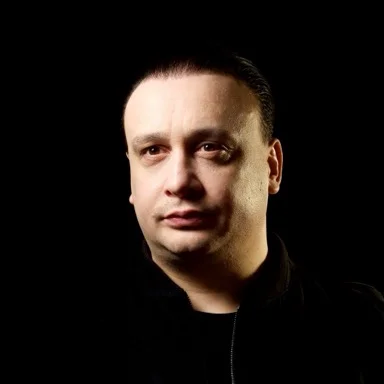
Michael Darius Eastwood · Independent AI alignment researcher
Published
The claim, at its widest, is that sequential recursion under genuine architectural self-modification can be super-linear: alpha greater than one, meaning the returns compound rather than merely accumulate. That is the programme's most distinctive hypothesis in the scaling family. The earlier measurement fell over, but the hypothesis did not. An earlier unblinded single-model configuration produced a fitted alpha of approximately 2.24, strongly super-linear and quotable, which was retracted after the same measurement failed to reproduce across architectures. The robust estimate on the corrected blinded six-model harness is approximately 0.49, sub-linear on current frozen systems. The equation and the ARC Bound alpha at most 2 were never retracted; only the 2.24 measurement was. The surviving claim, in its narrowest form, is an open prediction: at least one architecture-times-task combination will cross alpha equal to one under genuine architectural self-modification.
The paper trail here is deliberately public. Paper I introduced the super-linear hypothesis. An earlier unblinded single-model fit in Paper II measured alpha approximately 2.24, and that number appeared in early drafts and in early versions of several grant applications. Cross-architecture blinded replication returned an estimate near 0.49, retracted the earlier figure, and reset the claim's status to Speculative on frozen systems. The retraction was not hidden in an erratum: papers were annotated at the point of use, grant applications were corrected and the corrections logged, the spine status changed, and the truth gate was configured to flag any bare reappearance of the retracted number. The evidence for the claim now is not "we measured super-linearity on frozen systems"; it is "we measured sub-linearity on frozen systems and preserved the super-linear direction as a live hypothesis awaiting its real test on genuinely self-improving systems".
The retraction is the caveat. Alpha approximately 2.24 was attractive and wrong, and the programme said so in public. The T5 verification record notes an additional wrinkle worth surfacing: the internal analysis script (arc_analysis.py) contains a bug at lines 292 and 293 that will report the ARC framework as SUPPORTED even when the super-linear prediction fails. That bug is flagged for operator decision and is the reason the operator's own priority-claims dataset grades Claim 12 as Speculative rather than Confirmed. Tool inconsistencies of this kind are how retractions happen when nobody is watching; naming them is how the programme keeps its own scoreboard honest.
The falsification contract keeps the claim alive as a testable open prediction. An independent lab runs at least two architectures (a transformer and a state-space model such as Mamba) on at least three tasks at medium tier, at least twelve rounds each, with rotating hidden tests, and computes a bootstrap confidence interval on alpha. Confirmation requires at least one architecture-times-task combination where alpha is greater than one at p<0.05, replicated. If every combination comes out with alpha less than or equal to one and the confidence intervals still include one, the claim is borderline. If every combination comes out sub-linear with no confidence interval reaching one, the super-linear direction is refuted and the row moves to that status on the dashboard permanently.
Related notes: Paper I in plain English for the original super-linear hypothesis; Claim 2 explained for the equation family; Claim 10 explained for the sequential-versus-parallel result and Sharma and Chopra's concurrent independent work; the ARC Principle as the book presents it for how the R squared framing is now cited with its retraction attached. New readers: /start-here.html for the five-minute orientation to Michael Darius Eastwood and the ARC/Eden research programme.
From the book Infinite Architects: Intelligence, Recursion, and the Creation of Everything by Michael Darius Eastwood.