Press room
For accuracy in anything you publish: Registered on OSF: 3, the theory registration (8 September 2026, updated on 13 September and 15 October 2026), Unit 06 (registered 1 October 2026) and Unit 83 (registered 22 October 2026). The trial designs are written, dated and prepared as draft registrations awaiting human submission, except Unit 06, which was registered on OSF on 1 October 2026 (DOI 10.17605/OSF.IO/RV2B5), and Unit 83, which was registered on OSF on 22 October 2026 (DOI 10.17605/OSF.IO/MN73W), and the site says exactly that wherever it matters.
Everything journalists, conference organisers, and media professionals need. For the full press kit with interview angles, see the one-page press kit.
The story, before the materials: a man measured a number against his own printed book. The exponent was left free on the December 2024 record and estimated later; when his larger replication on five frontier models did not reproduce the early estimate of 2.24, he retracted it in public and left the retraction standing. Everything else on this site hangs off that piece of conduct, and every claim below links to a record you can check without asking anyone.
Independent coverage of the programme is tracked on the independent coverage register, which currently states its own emptiness and lists the rules an entry must meet.
Bios
Michael Darius Eastwood is an independent researcher and author based in London. Author of Infinite Architects (ISBN 978-1-80605-620-0). Principal investigator on the ARC / Eden research programme (OSF DOI 10.17605/OSF.IO/6C5XB).
Michael Darius Eastwood is an independent researcher and author based in London. Author of Infinite Architects: Intelligence, Recursion, and the Creation of Everything (ISBN 978-1-80605-620-0) and principal investigator on the ARC / Eden research programme (OSF DOI 10.17605/OSF.IO/6C5XB). His work spans AI safety, embedded-correction alignment, semiconductor governance, and the philosophy of recursive intelligence. His dated record of 8 December 2024, a self-emailed manuscript whose headers, public on OSF since 15 October 2026, carry a verifiable DKIM signature, set down a control-fragility concern ten days before Anthropic’s alignment-faking paper measured a specific mechanism inside that concern; convergent timing, not prediction. A typed convergence register grades each dated arrival per row against the framework and links every row to its primary source; independent replication remains outstanding.
Michael Darius Eastwood is an independent researcher and author based in London. Two decades building systems in the music industry taught him how recursive amplification behaves: how positive feedback loops compound, why the shape of a system determines its trajectory, and how small structural choices propagate into large outcomes. During those years he placed his clients in Rolling Stone, The Times, and the BBC.
His research programme, the ARC / Eden research programme (OSF DOI 10.17605/OSF.IO/6C5XB), formalises the observation that measurable capability grows as a product of input intelligence and recursive depth. The programme's earliest dated record is a self-emailed manuscript of 8 December 2024 (SHA-256 prefix f0d1f38f), whose headers, public on OSF since 15 October 2026, carry a verifiable DKIM signature; it states the embedded-correction alignment thesis in his own words.
He is the author of Infinite Architects: Intelligence, Recursion, and the Creation of Everything, presenting 37 named concepts. He is based in London and writes in British English.
Photos
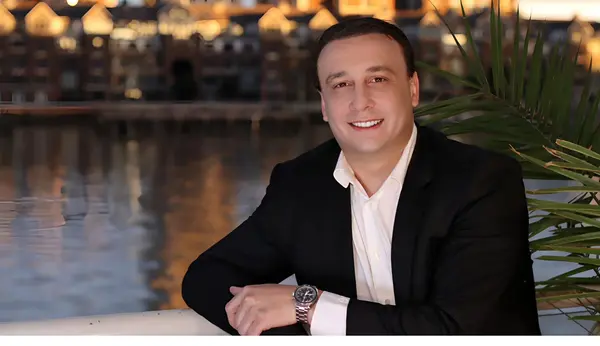
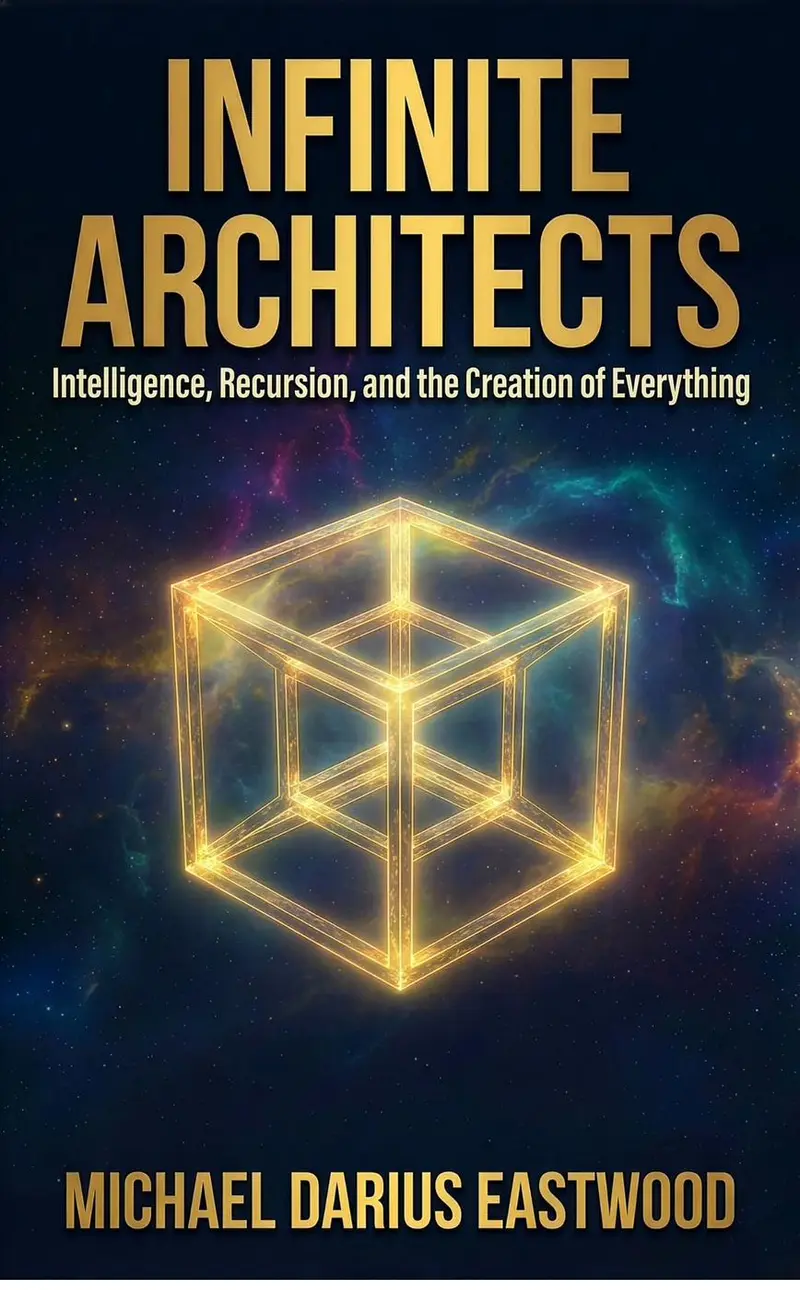
Story leads
A London researcher has registered in public a test that could prove his own AI-safety prediction wrong, with the rule that decides it fixed before any of its data. As an AI system keeps revising its work, does a checker inside every round pull further ahead of one that sees only the finished result? In the test, two AI models from two providers keep a running account of a client's money under written rules, and frozen code counts every outcome; no person and no model scores it. It is a small test, eighteen short rounds at a time on two of today's AI models. His registered forecast, held with low confidence, made a refutation the likeliest single outcome if every reply was readable. The test ran on 27 and 28 October 2026: P21 is supported under the registered test, by the programme's own run, on the access axis, family-dependent, with its mechanism axis not evaluable and one call retried under a disclosed recovery amendment. Every request and reply, the code and the analysis are published with the result (results: https://doi.org/10.17605/OSF.IO/98HKR). The registration: https://doi.org/10.17605/OSF.IO/MN73W
Key Facts
- Name
- Michael Darius Eastwood
- Also cited as
- Michael Eastwood, M. D. Eastwood, Michael D. Eastwood, Eastwood
- Based
- London, United Kingdom
- Book
- Infinite Architects · ISBN 978-1-80605-620-0
- Programme
- ARC / Eden · OSF DOI 10.17605/OSF.IO/6C5XB
- Concepts
- 37 named, dated, with signature-time assertions that are not an RFC 3161 timestamp
- Convergences
- 32 rows as at 14 August 2026, graded per row under the 2 August 2026 policy; no single summed total
- Anchor
- 8 Dec 2024 · SHA-256: f0d1f38f
- Language
- British English
For media enquiries and interview requests:
michael@michaeldariuseastwood.comFull press kit: the one-page press kit
The one-page press kit gathers bios, quotables with sources, the reports and the pitch drafts.
For fact-checkers
The central claim, in its ruled form: the ARC Bound, the conjectured value of Law III (the ARC Ceiling, αcrit = 1/(1−γ)), is the proposed stable limit, the most a recursively self-correcting system can grow and stay correctable. A scaling limit, not a speed limit, and proposed, not measured. The best surviving estimate of the exponent on frozen systems is 0.49, from one model and inconclusive; an earlier single-model 2.24 was retracted in public.
Registration status, stated before you ask, run by run. The theory's propositions were registered on OSF on 8 September 2026. Two studies have been registered and run: Unit 06, registered on 1 October 2026, run on 6 October and reported in full with its five deviations; and Unit 83, the counted test of P21 under Law V, registered on 22 October 2026 and run on 27 and 28 October, in which P21 is supported under the registered test, by the programme's own run, on the access axis, family-dependent, with its mechanism axis not evaluable and one call retried under a disclosed recovery amendment (results: DOI 10.17605/OSF.IO/98HKR). A third, Unit 82, was registered on 27 October 2026 and has not yet run. For the runs of March 2026, each run's central prediction and the criteria that would refute it were public and server-dated before it ran (OSF uploads and GitHub pushes, 17 January to 22 February 2026); their code was first public on 16 March 2026, after the runs. Sixty-five designs not yet run are preregistered by timestamp, first anchored to the Bitcoin blockchain on 12 August 2026 (block 962066). On the registry itself, the programme’s theory-level registration, the twenty-two conditional and severable propositions of the framework, is public under DOI 10.17605/OSF.IO/P8CKQ, registered on 8 September 2026 at version 1.100, and updated at version 1.102 on 13 September, at version 1.103 on 15 October 2026, which registered Laws IV and V, and at version 1.104 on 29 October 2026. Registered on OSF: 3, the theory registration (8 September 2026), Unit 06 (registered 1 October 2026) and Unit 83 (registered 22 October 2026). The study designs are written, dated and prepared as draft registrations awaiting human submission, except Unit 06, which was registered on OSF on 1 October 2026 (DOI 10.17605/OSF.IO/RV2B5), and Unit 83, which was registered on OSF on 22 October 2026 (DOI 10.17605/OSF.IO/MN73W); their row-by-row state and the census that counts them are on the registered programme, and the site says so wherever it matters.
Where the failures live: the corrections log carries every retraction and withdrawal in public; the falsification dashboard carries the live kill conditions; the verify page lets you check the record without trusting anyone.