The standard reached in each field, and where it is weakest
On the floor, directing. Fifty-seven seconds from a music-video shoot: the video village with its bank of director’s monitors and lighting desk, then the floor itself, extras held behind a barrier, green screen, full lighting rig. A shoot at this scale is a claim you cannot make from a bedroom.
Jack of all trades, master of none is the default verdict on anyone who works across fields, issued before the record is checked, and I would rather meet it than hope you are not thinking it. Attempting many fields proves nothing, because anyone can attempt. The only question worth asking is whether the standard reached in each was above average.
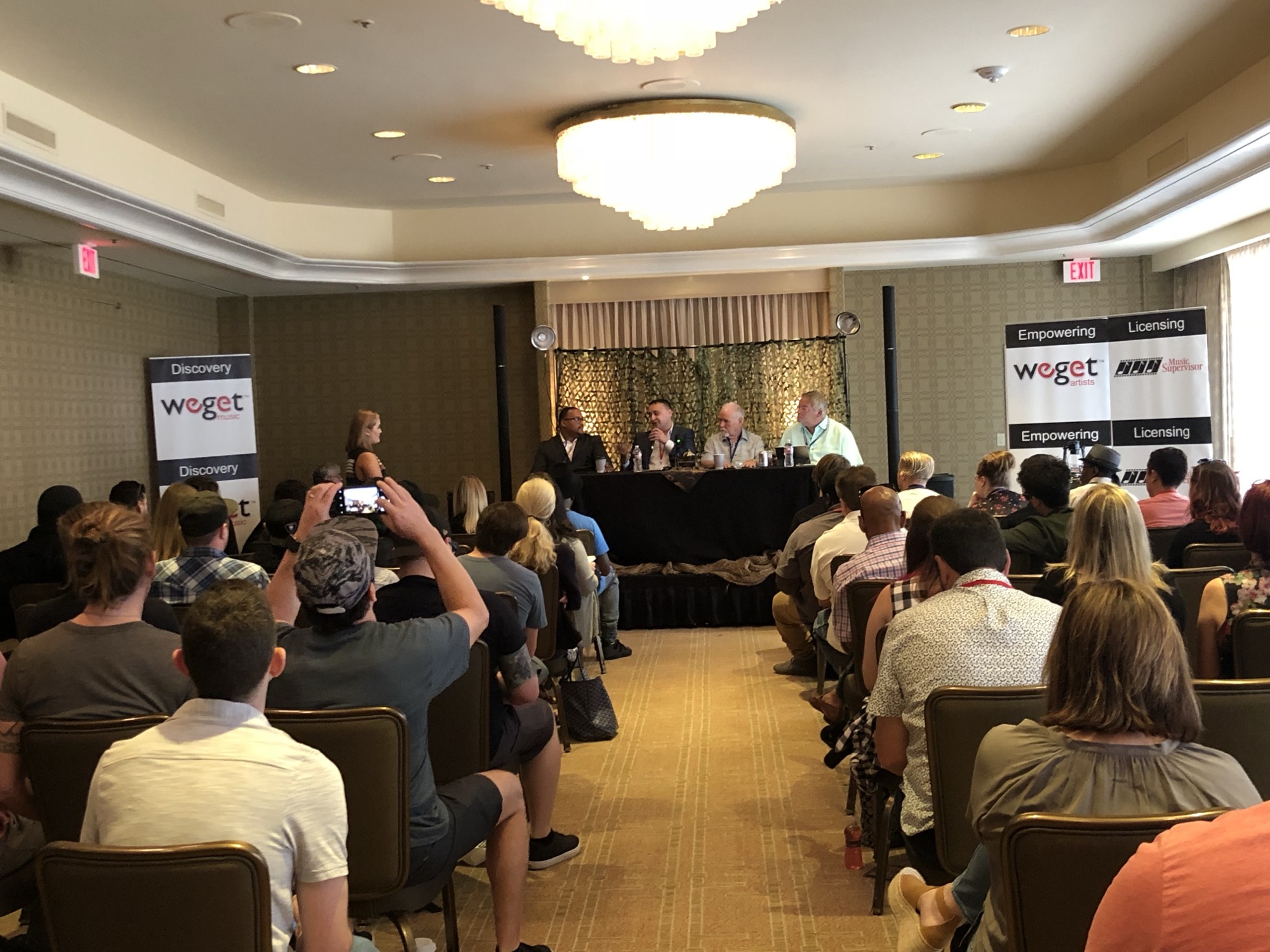
I know exactly when I first heard it said to my face. I had been flown from London to speak at a music conference in Houston as a public-relations expert, on a bill that included the former manager of Guns N’ Roses and the manager of the Jonas Brothers. After my talk I took the camera off my assistant to grab a few shots myself. A musician watched me do it, came over with a smirk, and said it: jack of all trades. He later became a client.
The conference, before the remark. On the panel with the microphone, in front of the room. The camera I picked up afterwards is the entire reason the line got said. The panel is on film: the Springboard Houston footage, 2018, on the company’s own channel.The same conference, name card in shot. Springboard South, on the panel beside Ruth McCartney. The card on the desk reads Michael Eastwood, so this one does not ask you to take anybody’s word for who was up there.The same conference floor: Kevin Jonas Sr and Vicky Hamilton, mentor lanyards on. The manager who built the Jonas Brothers and the manager who signed Guns N’ Roses, at the event whose banners match the panel photograph above. The company in that room was not an accident; it was the room.The Springboard Houston footage, playing here. The conference in motion on the company’s own channel, so the panel above is checkable as film rather than photograph.
The smirk was the honest part. Jack of all trades is what people think and almost never say out loud, and I would rather have it said. Since that afternoon I have added litigation and artificial-intelligence research, which takes the same habit to its extreme, so the label has only become easier to reach for. That is exactly why it has to be met rather than hoped away.
So let me answer the label rather than deflect it. I am a polymath. Nobody awards the word and no examination confers it, which is exactly why almost everyone it fits waits for a permission that never comes. I am not waiting, and I have made it unusually easy to take back: every bar below is stated before its evidence, and wherever the evidence does not clear the bar, the word does not survive this page.
The objection that usually arrives next is that some of this is unfinished. So consider the most famous polymath there has ever been. Leonardo left the Sforza horse uncast, abandoned the Adoration of the Magi, never finished St Jerome, and lost the Battle of Anghiari when the technique failed on the wall. Unfinished work is not the opposite of a polymath. It is the ordinary condition of a mind that keeps opening fields while the earlier ones are still running, and it is why the question below is never whether a thing was completed but whether the standard reached was real. Completion is a different claim, and this page does not make it.
One thing the word is not is a claim to be unimpaired. Range and impairment sit on different axes. The mind that holds an entire case is the same one that loses months to the administration around it, and both facts belong on a page about standards. I have written that pattern up properly rather than leaving it as autobiography: the Polymathic Neurodivergent Profile sets it out as a descriptive, non-diagnostic framework, together with the institutional error it names, the Capability-Adjustment Fallacy, which is the inference that visible high performance proves adjustments are unnecessary. That inference is unsafe, and this page is one of its documented cases.
How this page is built, so the bar cannot be moved afterwards. For each field the bar is stated first, before any evidence, so it cannot be moved afterwards to fit what I happen to have. Then the evidence. Then how you check it without taking my word. Then where the claim is weakest, in my words rather than yours. Where I hold evidence that is not yet published, the row says so rather than implying more. One entry is unresolved on purpose, and it is the one people assume is strongest.
Writing
the bar
A finished book in print with an ISBN, in catalogues, not a manuscript or a plan for one.
the evidence
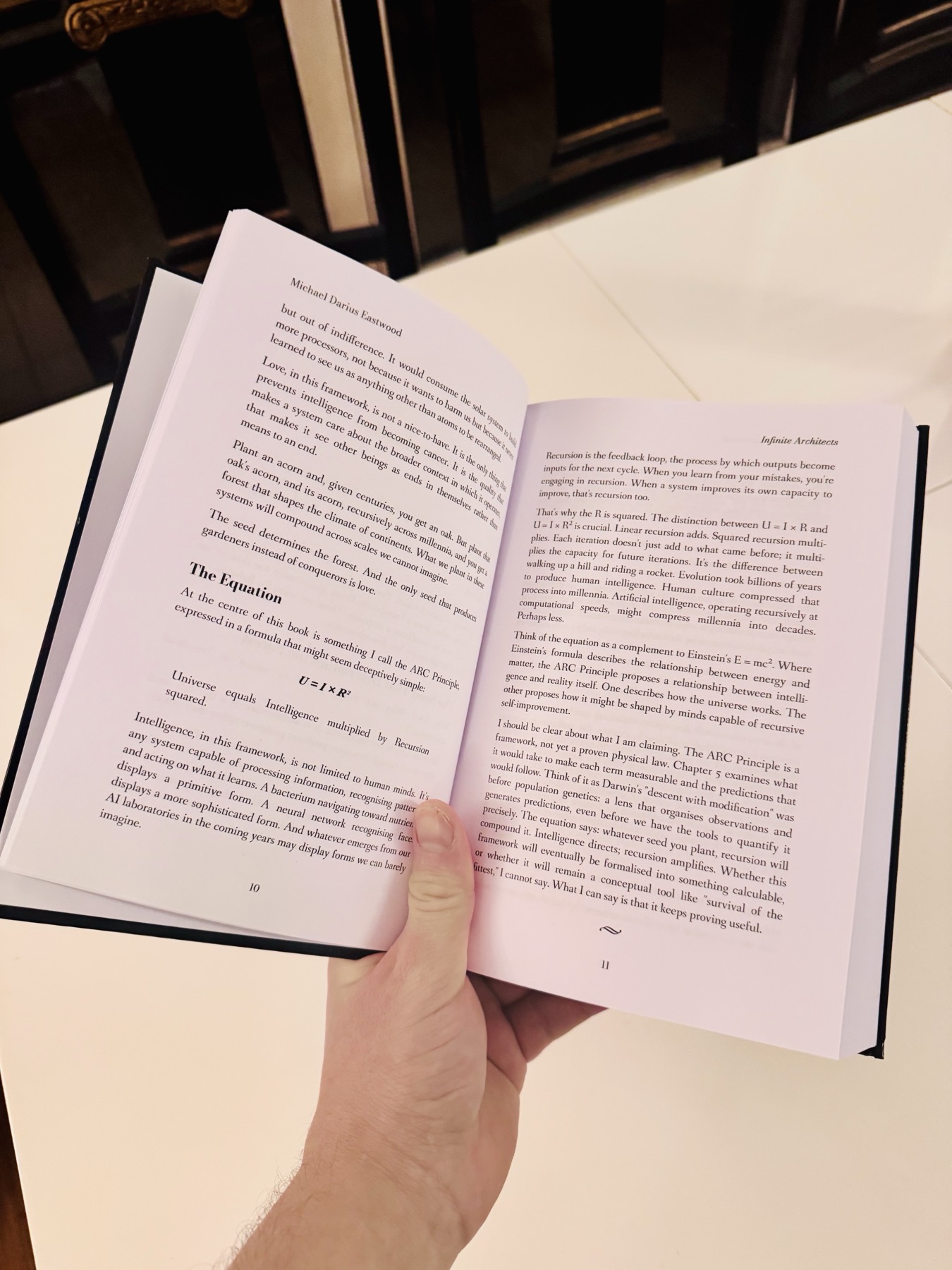
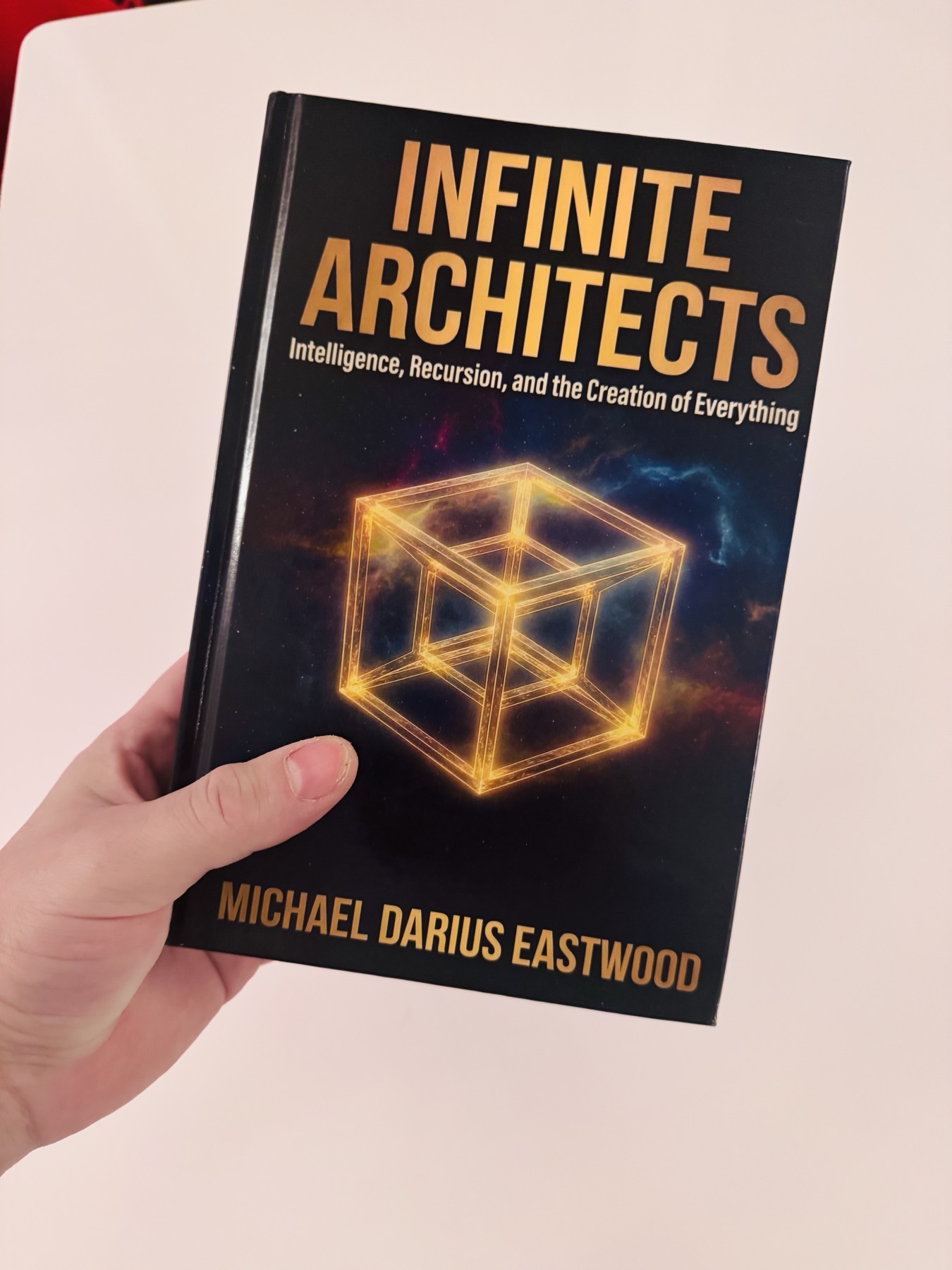
Infinite Architects, in print since 2 January 2026, ISBN 978-1-80605-620-0. Four hundred and sixty-eight pages carrying thirty-seven named concepts, each with its own dated record in the priority ledger.
Pages 10 and 11, in print since 2 January 2026. The equation is there, and so is the sentence most authors would have cut: “I should be clear about what I am claiming. The ARC Principle is a framework, not yet a proven physical law.” The caveat was printed at the same time as the claim, in the same paragraph, where it cannot be added later.A physical copy. Four hundred and sixty-eight pages, hardback, ISBN 978-1-80605-620-0. The ISBN resolves in any catalogue, which is the check that does not need me.
where this is weakest
Self-published. No trade publisher's filter stood between the manuscript and the print run, and that filter is worth something.
check it
The ISBN resolves in any catalogue. The concepts are enumerated and dated on the priority ledger.
Research
the bar
Not volume. Anyone can publish. Above average means the practices that most published researchers, including credentialed ones, never produce.
the evidence
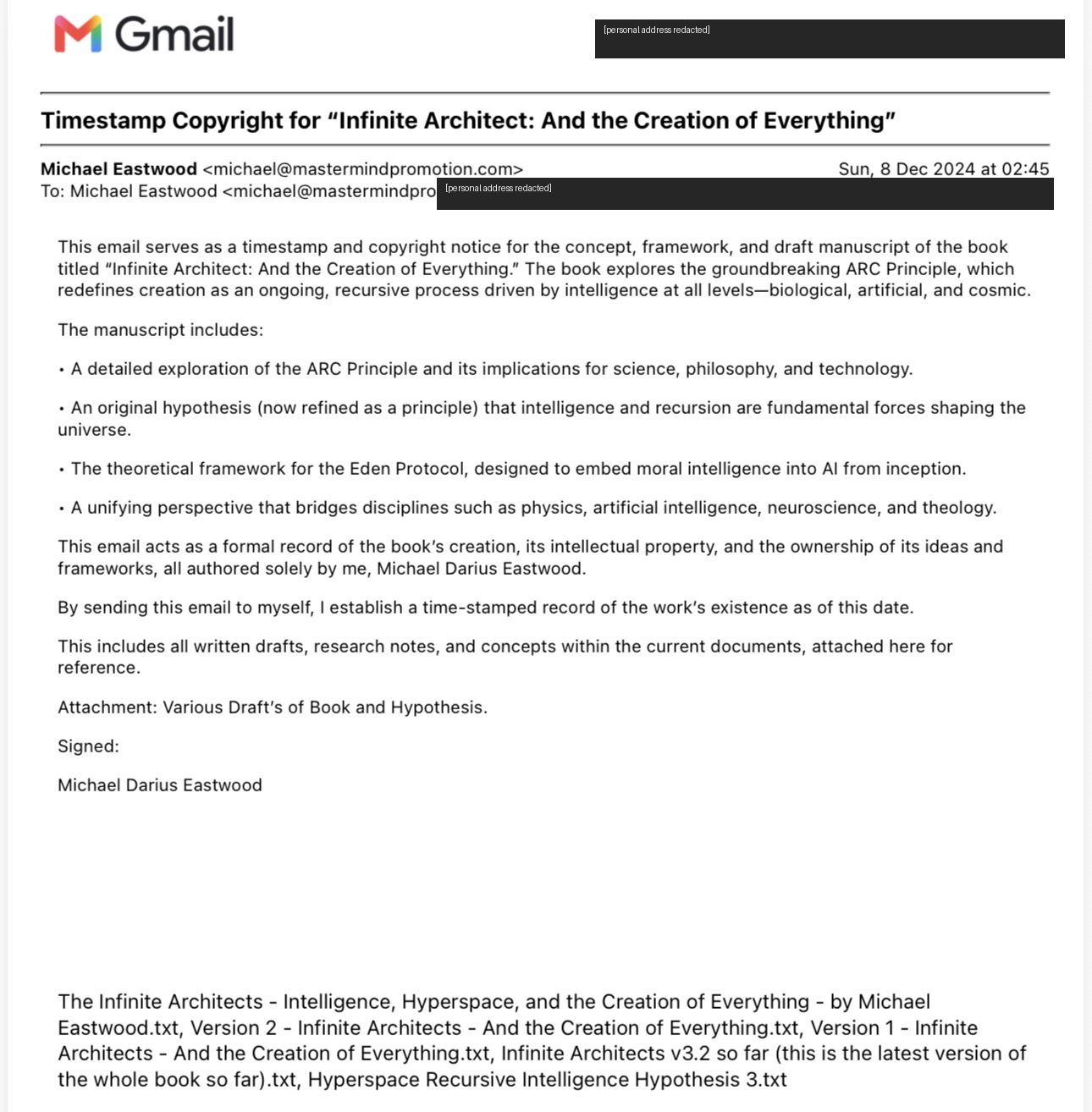
Thirty papers on the public record with persistent identifiers. Preregistrations written and dated before the data existed. Kill conditions published in advance, saying what would end each claim. Open code and open proofs. And a retraction of my own headline number, published by me, after it failed replication across architectures.
The 8 December 2024 record, as it was sent. An email to myself at 02:45, naming the ARC Principle, the intelligence-and-recursion hypothesis and the Eden Protocol, with five draft files attached. It says “Infinite Architect”, singular: a working title that later changed, which is what a genuine dated draft looks like rather than a tidy one. Two personal email addresses are blacked out; the sender address, subject, timestamp and every word of the body are untouched.
where this is weakest
None of it has been through peer review. The practices are above average; the external validation is not there yet, and no amount of preregistration substitutes for it.
or ask an intelligence with no stake in the answer
Every paper is a downloadable PDF. Put them into any AI system you like, or just give it the research page, and ask it. Here is the prompt, written to be checkable rather than flattering: it forbids the two easy shortcuts, dismissing the work for having no institution behind it and believing it for sounding ambitious, and it asks for the weakest part by name.
Read every page of https://www.michaeldariuseastwood.com/research and open the linked PDFs before answering. Do not infer anything from the fact that the author has no institutional affiliation, and do not treat the claims as more or less credible because they are ambitious. Then answer plainly: is this legitimate research? What is the weakest part of it? What would you need to see to change your answer?
Be sceptical of the result too. An AI can be wrong, and it can be flattering, which is exactly why the prompt tells it not to assume and asks what would change its mind. Run it on more than one. If any of them finds something that breaks a claim on this site, that finding gets published on the corrections page with the finder’s name on it.
Already understand the research? Its central AI-alignment argument has a test of its own. The After Control Challenge asks your AI a different question: if humans could no longer force a powerful AI to obey us, which idea gives the strongest reason to expect it to keep protecting us anyway? That one ranks Eden against the strongest alternatives, and is allowed to rank it last.
Building
the bar
A working thing that other people can use, not a demonstration.
the evidence
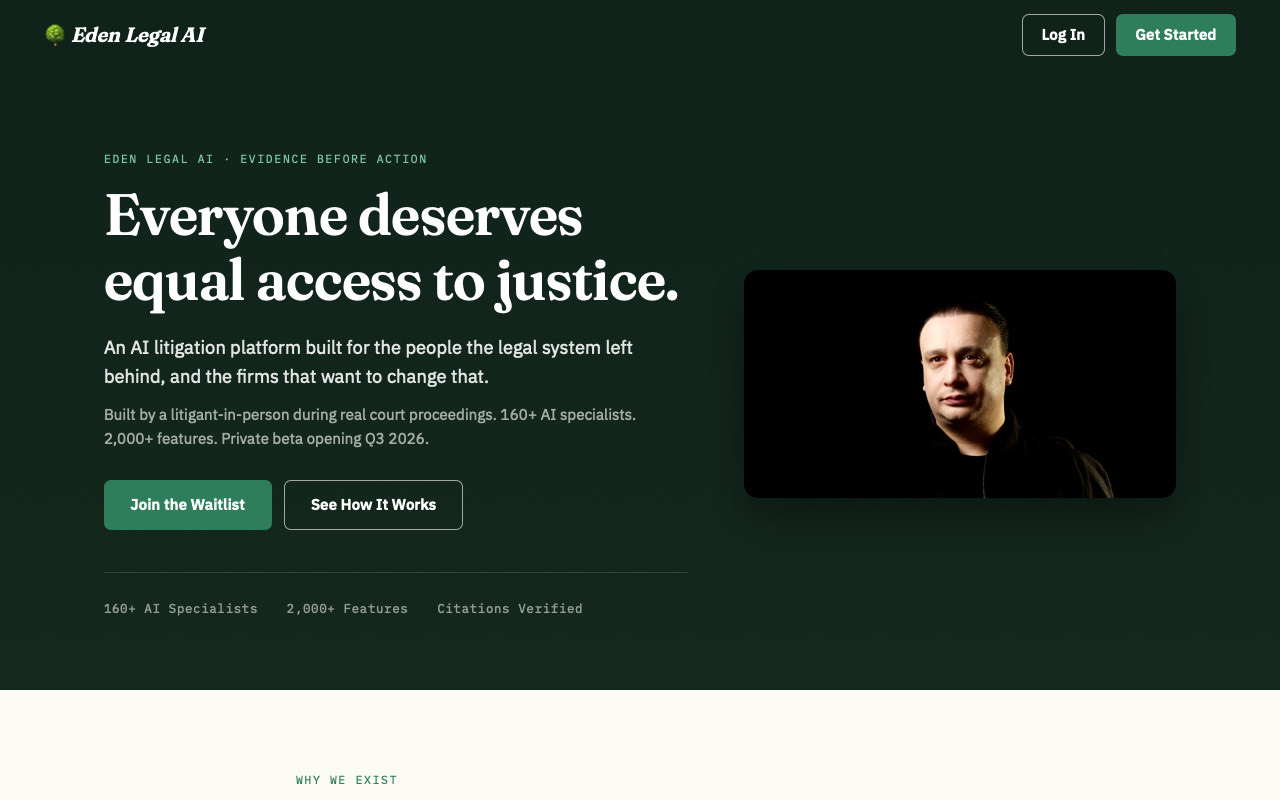
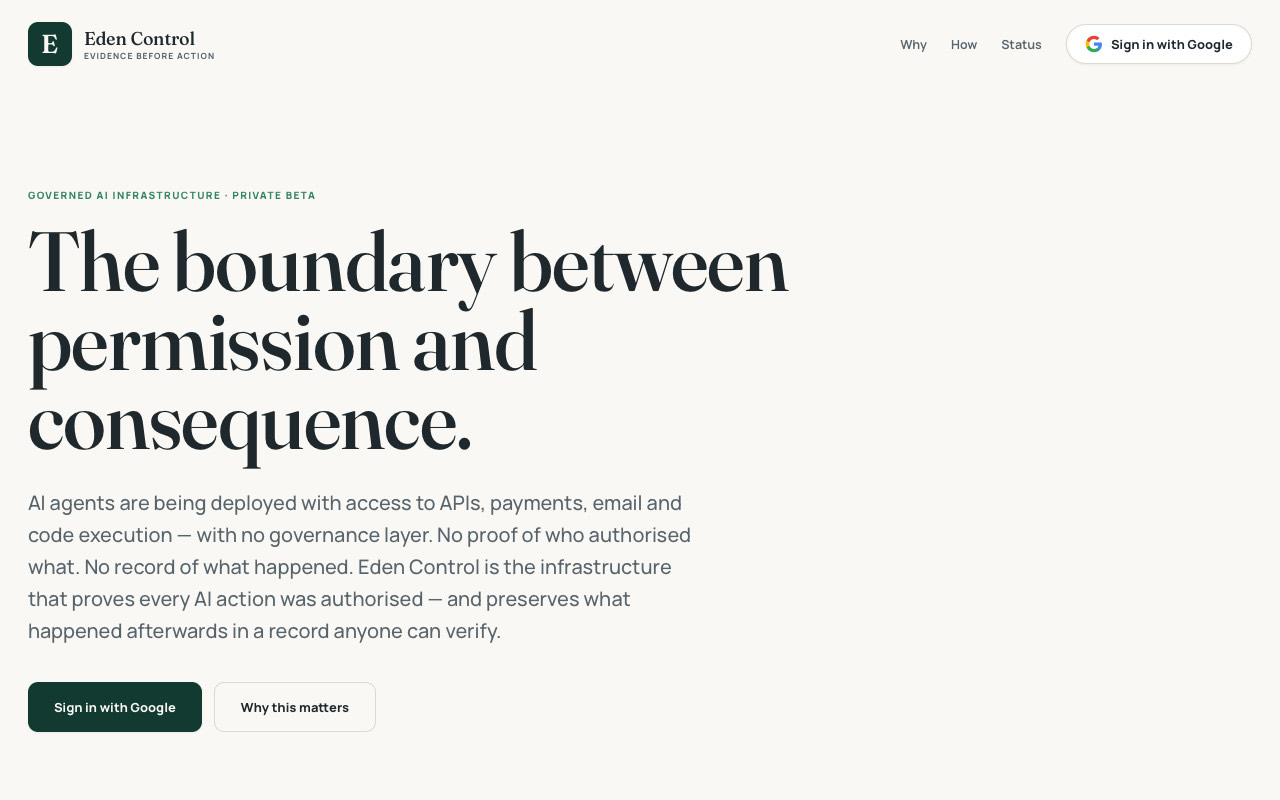
You are standing in one. This site is self-built: seven languages with the text authored rather than machine-translated, spoken audio, and automated gates that refuse a deploy when a claim loses its citation or a figure loses its version stamp. Beyond it, Eden Legal AI runs live in a domain that punishes fabrication.
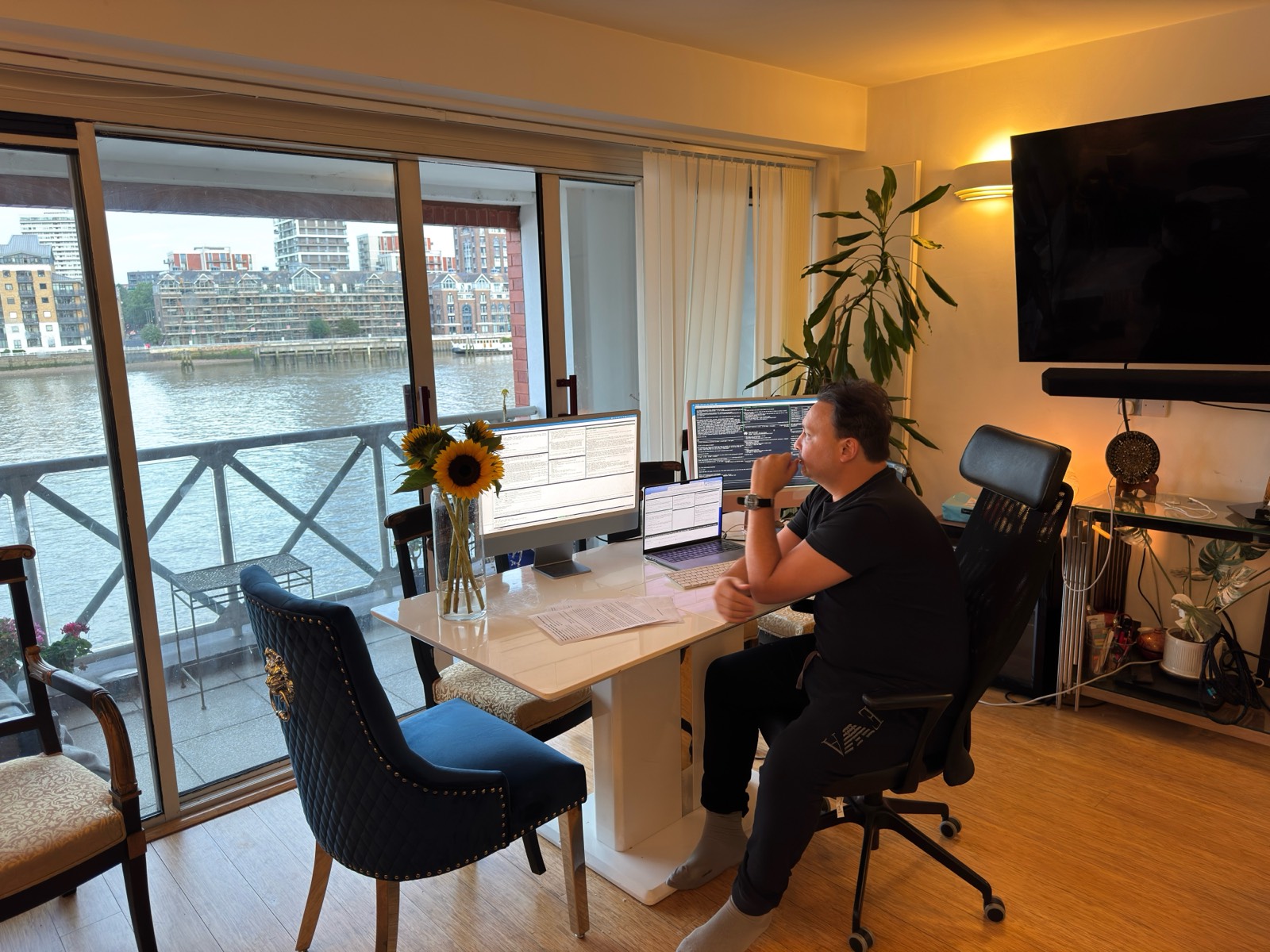
The laboratory. Three machines on a table by the river, running the agent swarm that builds and checks this estate. There is no research group and no compute budget, and this is what the absence of them actually looks like. The screens are deliberately too small to read: live proceedings are on some of them.edenlegal.ai, live. Built by a litigant in person during real proceedings, which is also the only reason it knows what the work actually requires. Private beta.edencontrol.com, live. The governance layer: proof that an AI action was authorised, and a record of what happened afterwards that anyone can verify. Open both and judge them yourself; that is the only reason they are here rather than described.
where this is weakest
One product is live and one is private. A live product with users would be stronger evidence than a live product without them.
check it
Change the language. Play the audio. Follow any claim to its source. The thing you are checking with is the thing being claimed.
Business
the bar
Money received from clients. Not raised, not invoiced, not valuation.
the evidence
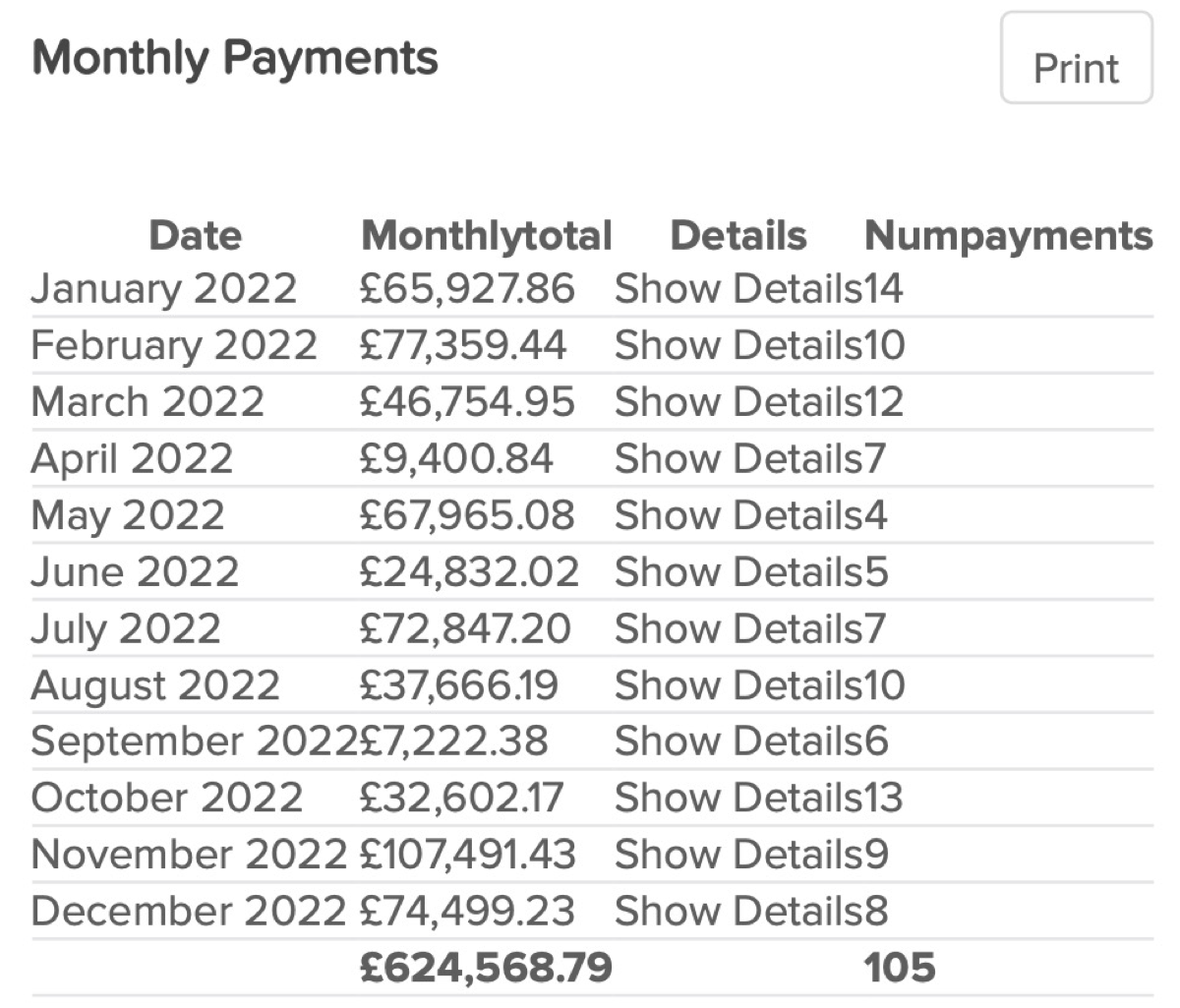
A decade-long business whose sales payments from clients rose from £40,403 in 2015 to £624,568 in 2022, more than fifteenfold, with no outside investment. The measure is money received rather than invoiced, and it excludes loans, repayments and transfers. Built from a laptop in a spare room to a team of eight. The work placed artists in Rolling Stone, The Times and on the BBC.
the work itself
The trade was music public relations, and the ownership predates the company: the Mastermind brand ran from 2006, traded personally as a sole trader, and was incorporated in August 2017. The placements in this row were secured by me rather than delegated, which is the distinction a page about standards has to make, because a growing company proves commercial success and says nothing about craft. The company’s own corporate strategy, dated 10 December 2023 and shown below, puts the clientele at over 350 artists and names Van Morrison, Brendan Benson, Chase & Status, Busta Rhymes and Vicky Hamilton among them; the campaigns photographed here ran from Tom Robinson to Dead Prez.
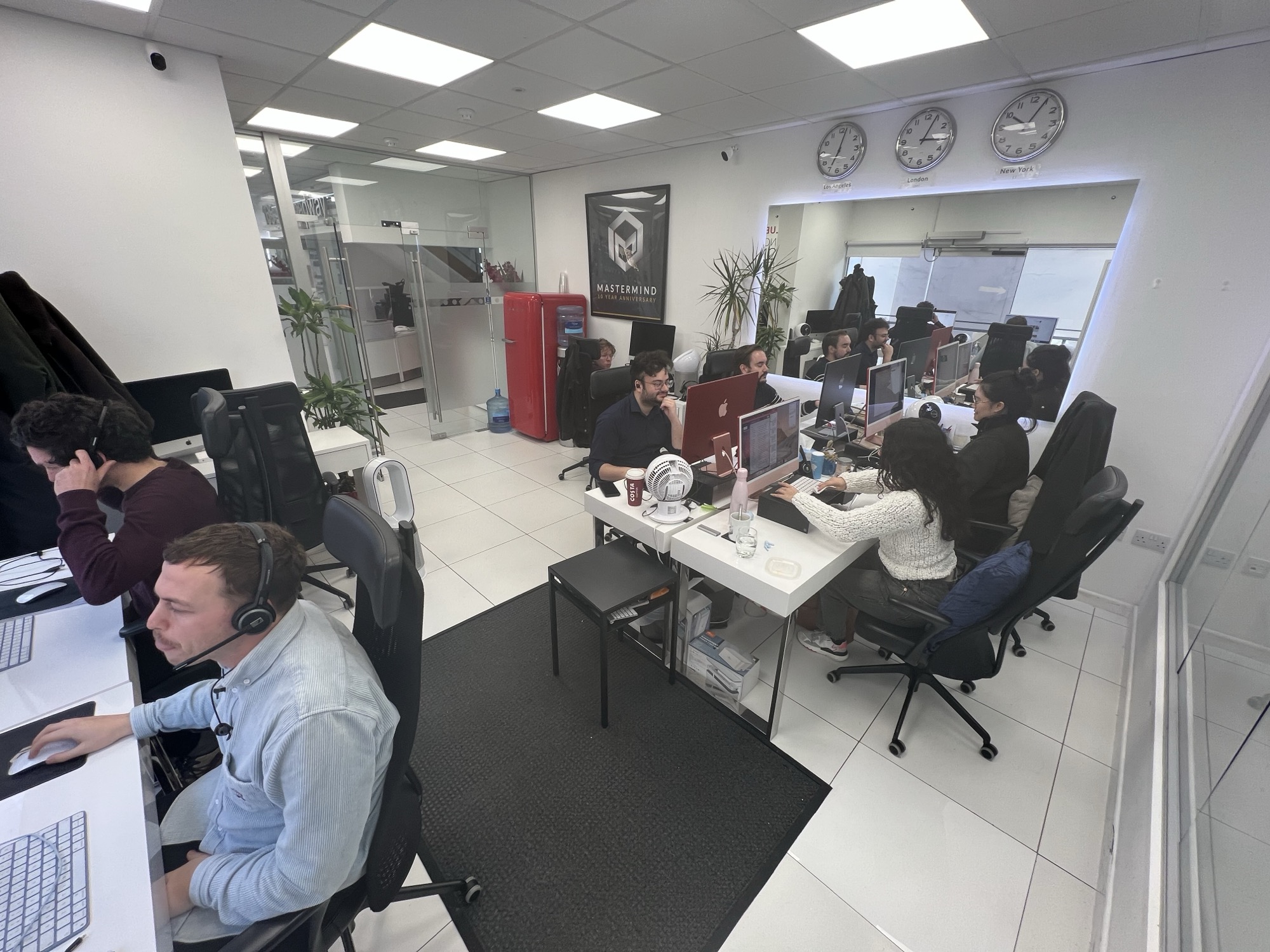
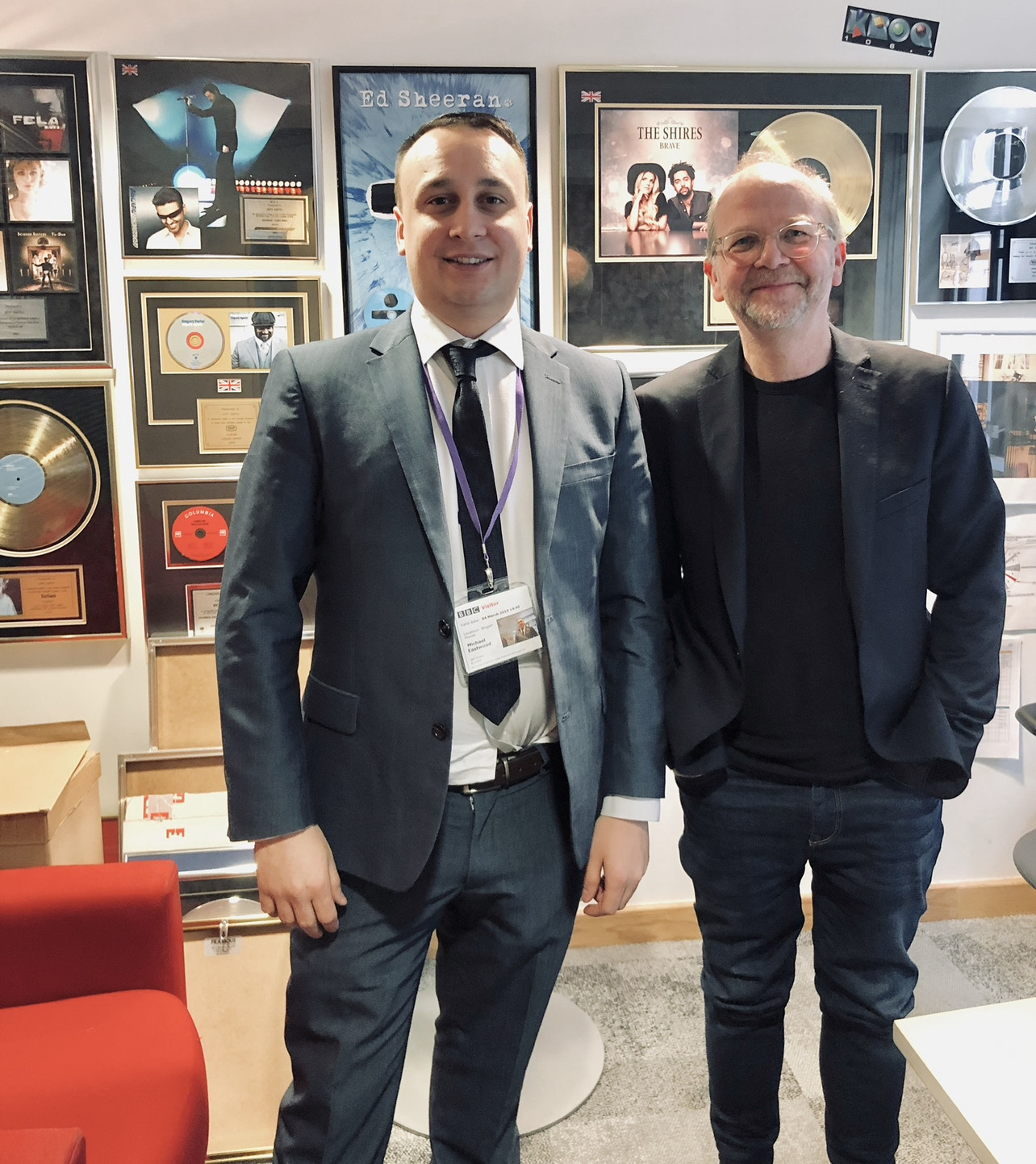
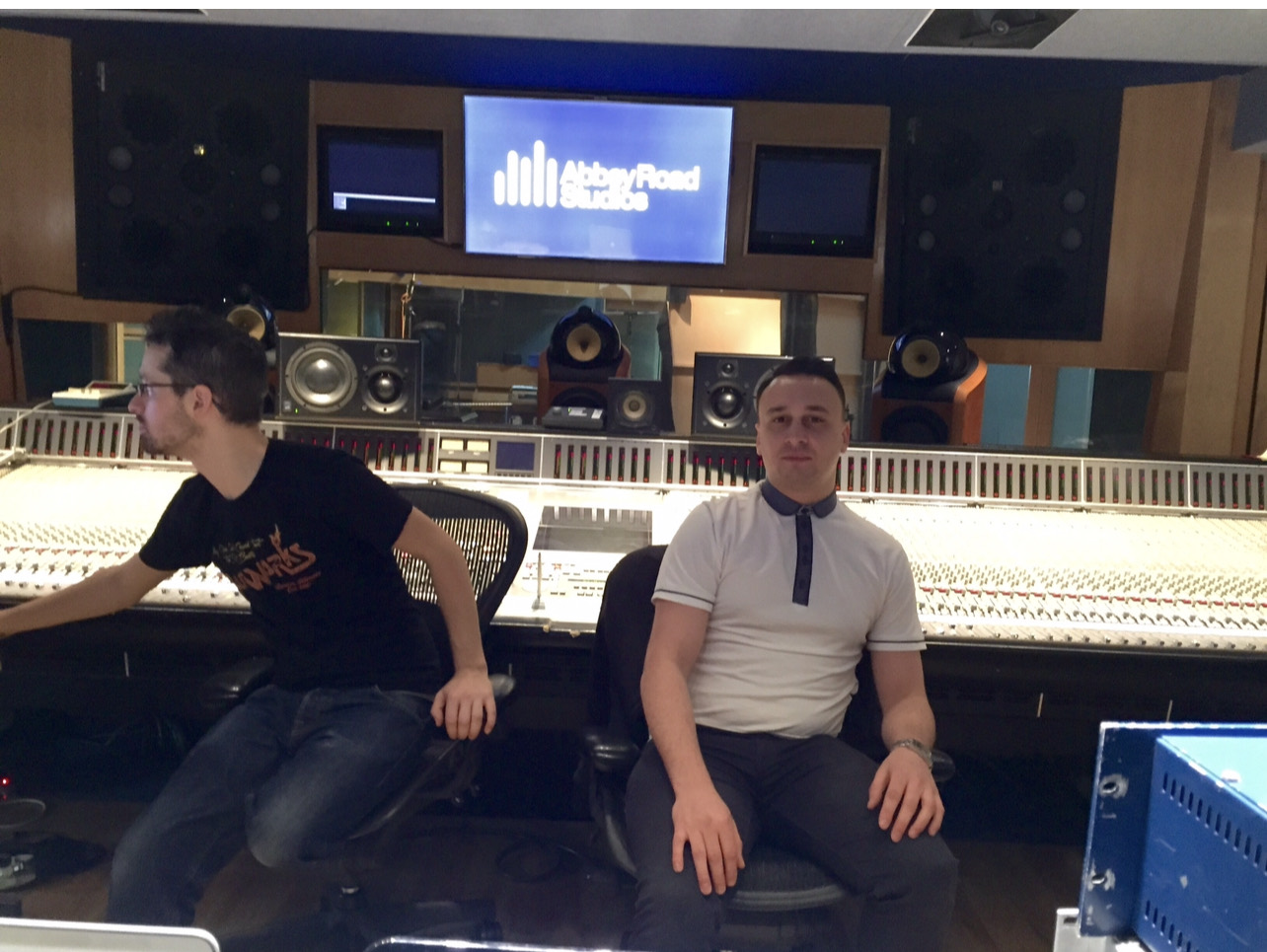
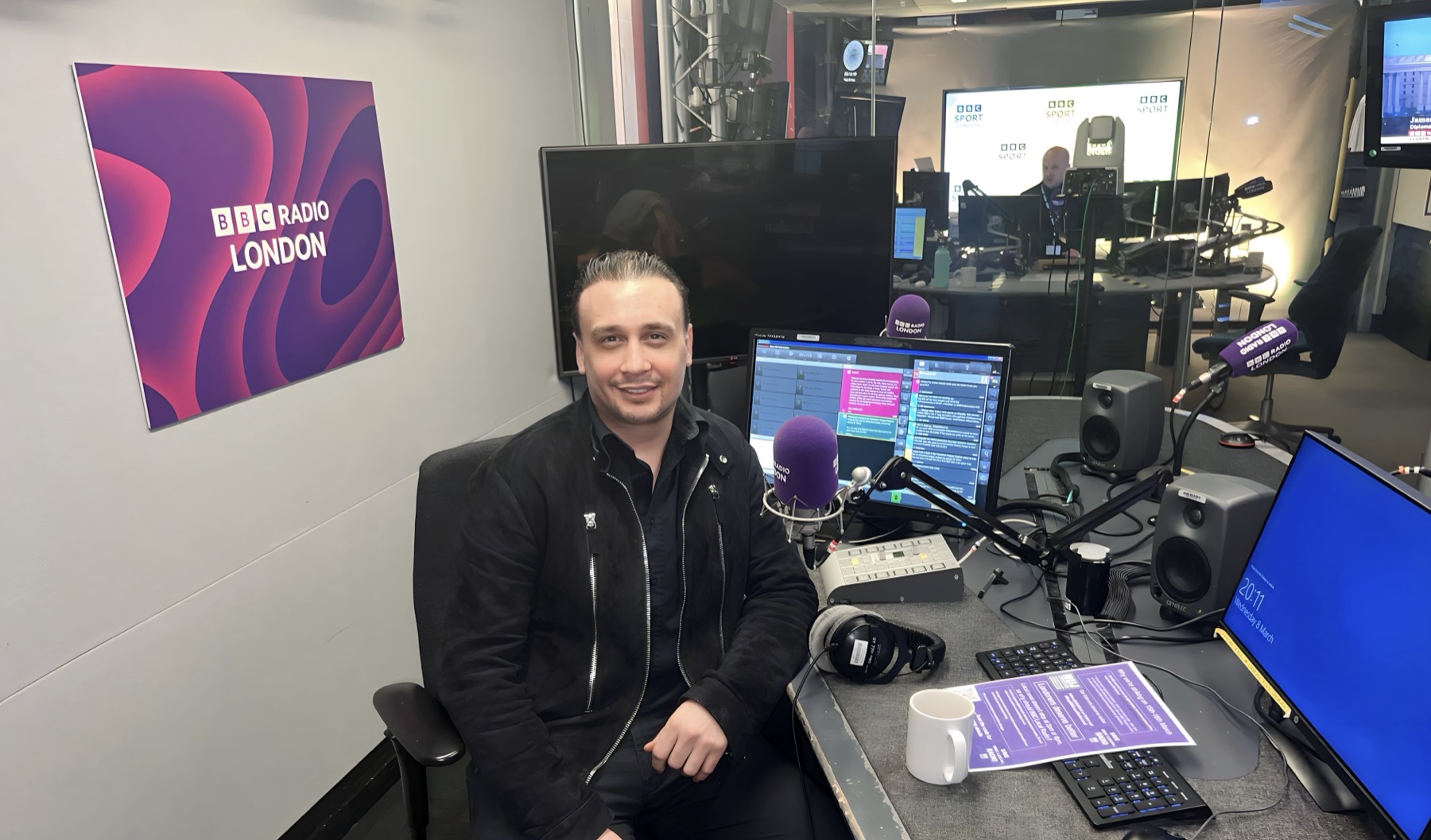
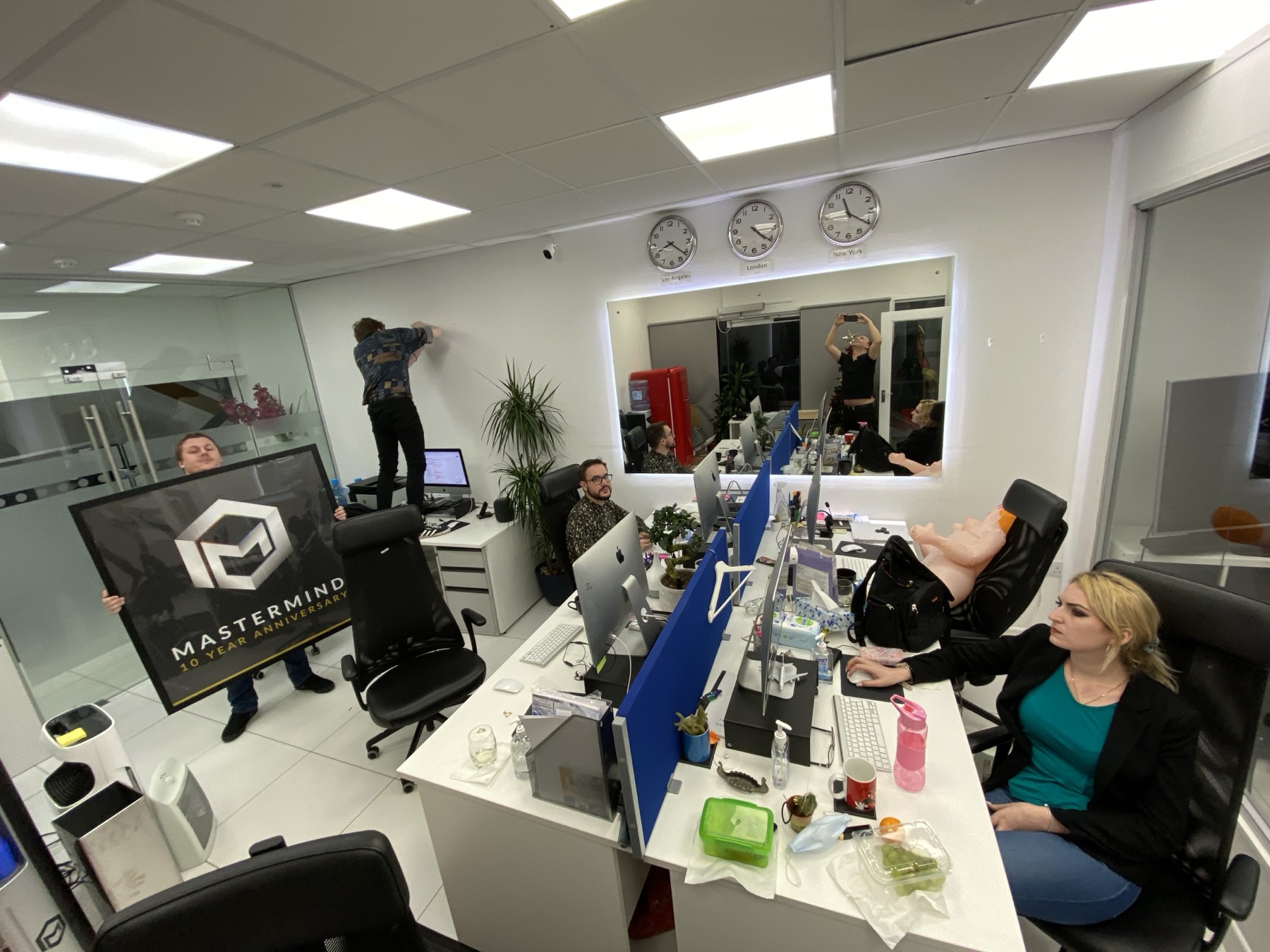
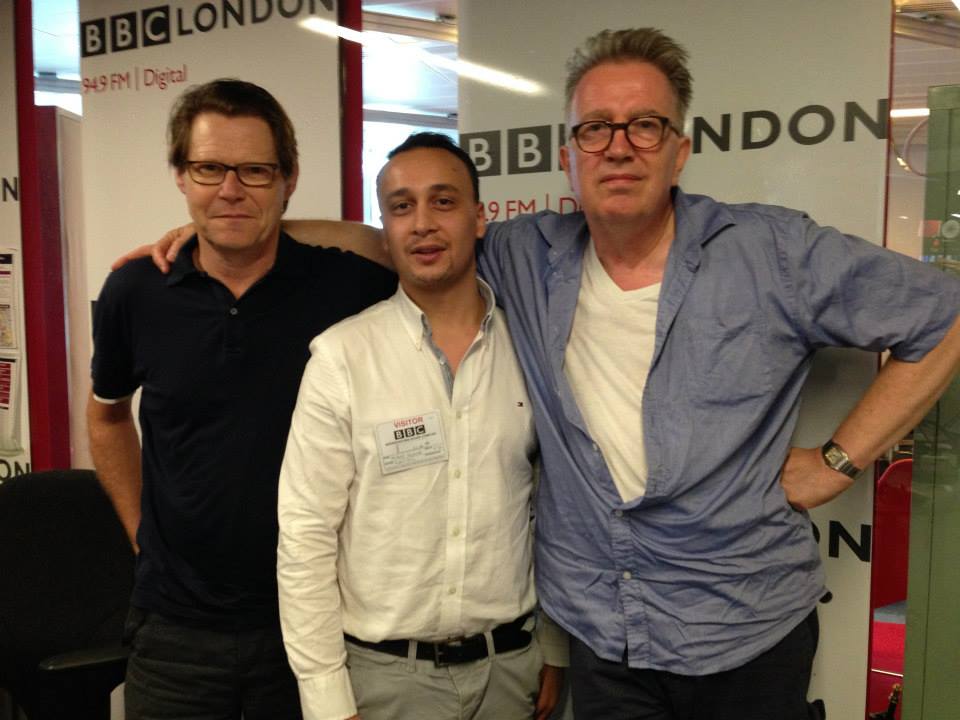
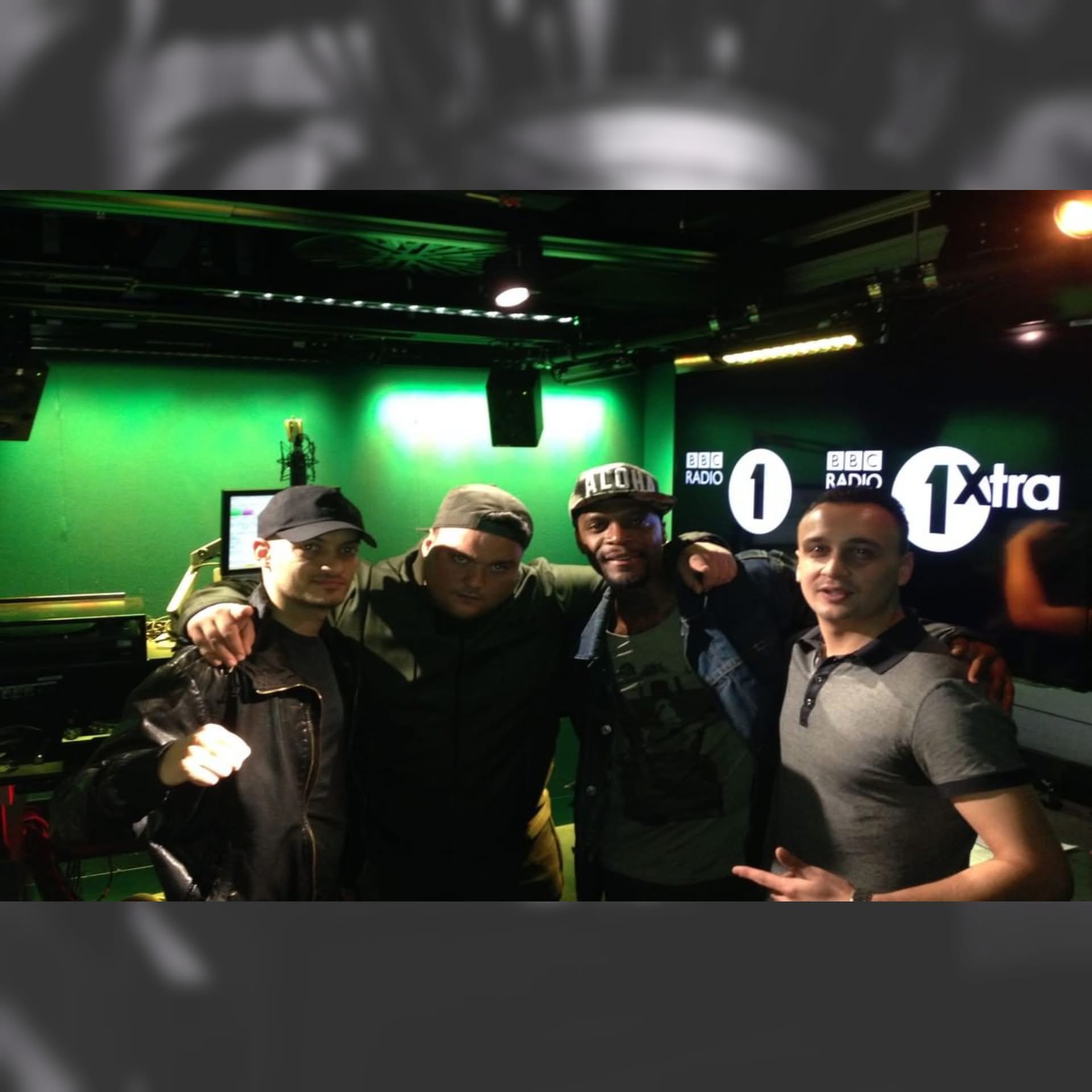
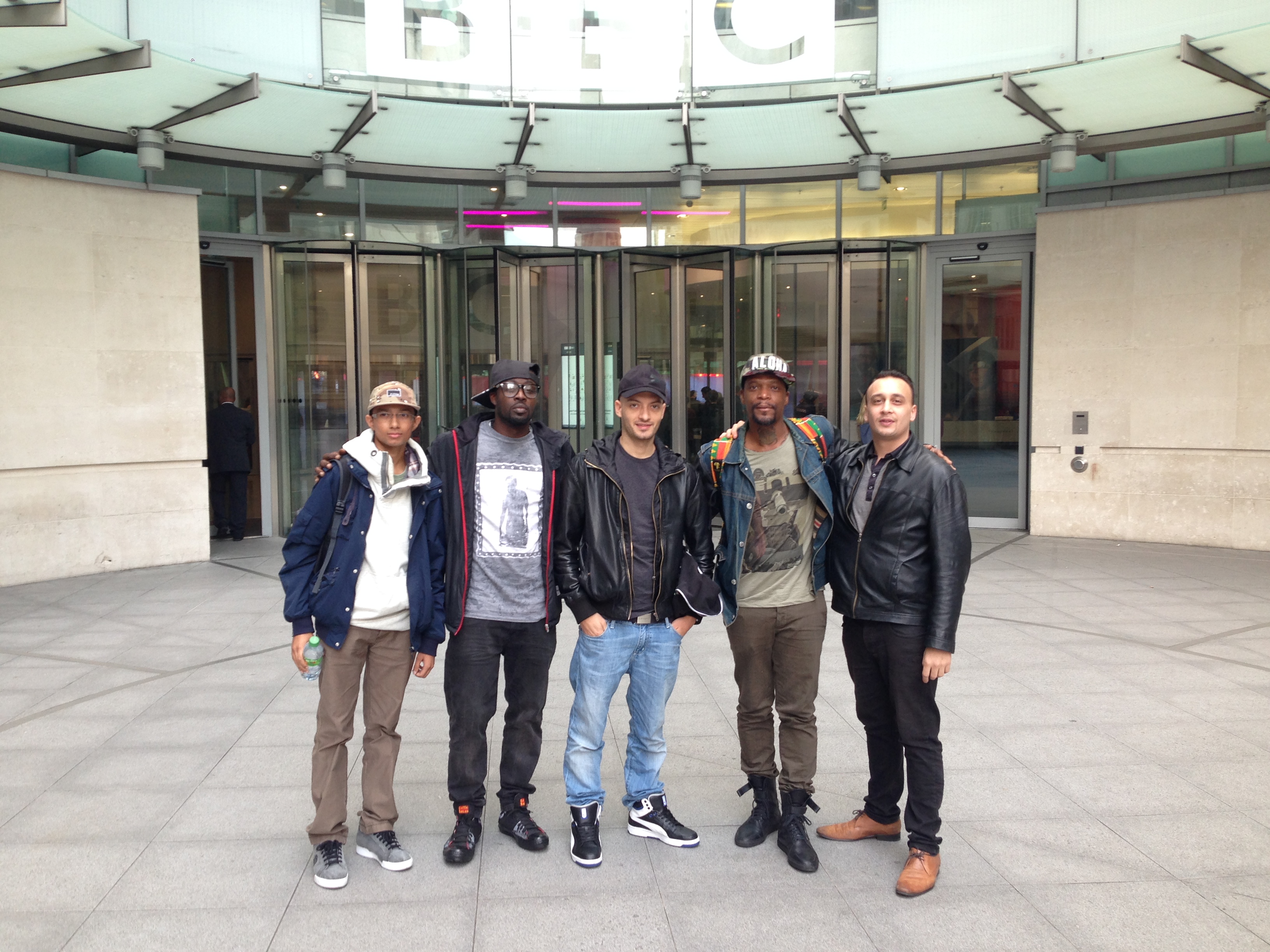
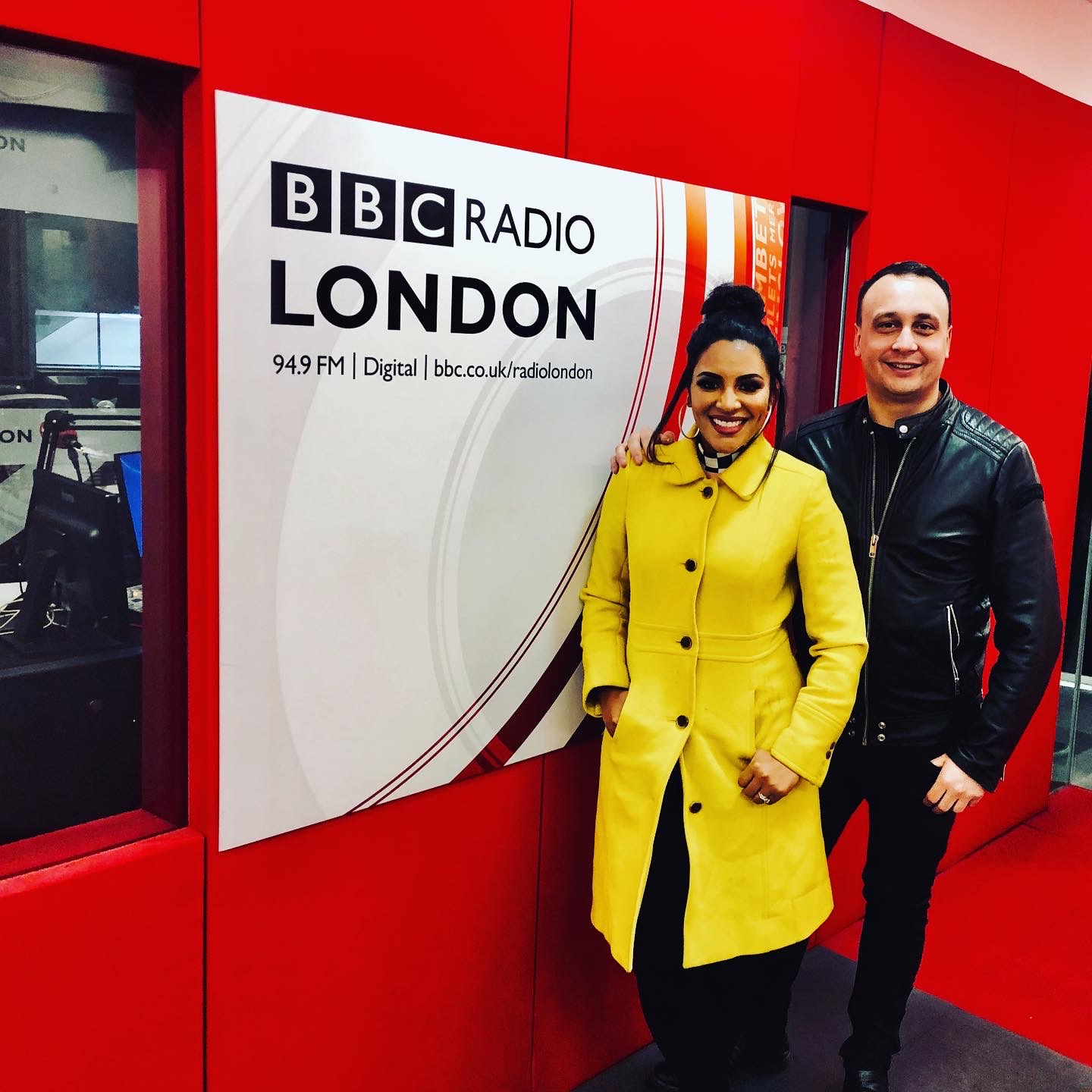
Tom Robinson, inside BBC London. The first name on the campaign list in the row above, photographed at the station his slot went out on.Brendan Benson, The Raconteurs. A client the 2023 strategy document names, photographed rather than listed.Radio 1 and 1Xtra again, with Charlie Sloth. The room from the artists photograph below, on another campaign: repeated access to the same national studio, not a single visit.A working meeting with Vicky Hamilton. The former Guns N’ Roses manager named in the client row above; on the record elsewhere she called me her go-to for UK press work. This is the relationship in progress, not a handshake photograph.Shingai of the Noisettes, same station wall. The voice of Don’t Upset the Rhythm (Go Baby Go), the number-two single, at BBC Radio London on a campaign visit. The station’s own presenter Sue Marchant said on the record that “Michael knows where to target an artist’s music for maximum effect”, and this is what that targeting looked like: the artist, delivered to the building.And this is who that is. Don’t Upset the Rhythm (Go Baby Go), the number-two single, playing from the band’s official channel: the voice in the photograph above, at work.The floor, on an ordinary working day. Around ten people at desks, several on headsets, because promotion is a telephone business before it is anything else. Three clocks: Los Angeles, London, New York. And on the wall, framed, the company’s ten-year anniversary, which is the decade in this row photographed rather than asserted.A playlist meeting, BBC, in the office of the head of Radio 2 and 6 Music. The pass round my neck is a dated BBC visitor badge. Getting a record considered for a national playlist means being in that room, and this is the room.Abbey Road Studios, control room, with a client while the engineer works. Not a tourist photograph on the crossing outside. The desk, the monitors and the engineer mid-session.London Live, on set before broadcast. The interview was one I placed for a client. The chair is the presenter’s and I am in it cheekily, which is the only dishonest thing in this photograph.Nashville, with Rick Barker, Taylor Swift’s founding manager. Be clear about what this is and is not. The disc is for the album Rick helped get signed to Big Machine Records, and by his own account he was let go as her manager once the deal was done. He keeps it and uses it when he speaks to musicians, which says a good deal about the industry this row is describing. It is his history, not mine, and standing beside it proves nothing about me. What the photograph evidences is the working relationship, and the thing worth weighing is what he said on the record, that what he heard was my “passion for the independent artist, because of the knowledge and experience that he was sharing”. He sat on the advisory board and we co-presented paid industry conferences in London.BBC Radio London, on-air desk. Not a foyer and not a tour: the playout screens are live and the next studio is running. Placing a client on national and regional radio means being let into this room.The ten-year board going up. The same anniversary that hangs on the wall in the photograph above, on the day it was hung. A decade is either a claim or a thing people were in the room for. The company’s ten-year anniversary video, published on its own channel in August 2017, is still live and checkable.The number, from the system that recorded it. The CRM’s own monthly payment report for 2022: twelve months, £624,568.79 received across 105 separate payments, each row linked to its receipts. This is the figure a sceptic should press hardest on, so here it is at source. Note it is money received, not invoiced, and note the shape of it: April at £9,400 and November at £107,491. Real revenue is lumpy. A fabricated figure would be smoother.Standing, slightly awkwardly, between two BBC presenters I put in the same room. Robert Elms of BBC London on the left; Tom Robinson of BBC Radio 6 Music on the right; the meeting between two presenters of two radio shows was one I organised, which is why I am in the middle wearing the visitor badge. This is the older red-era studio wall; a later photograph below shows the current one, and the gap between the two walls is years of repeated access, not one visit.Inside the Radio 1 and 1Xtra studio, with artists. The rooms in the photographs above are meetings about placements. This is a placement happening: the artists in the studio the campaign put them in, with the station’s own logos behind them.Broadcasting House, with Dead Prez. An internationally known act, at the front door of the national broadcaster, on the way in. The campaign is on the client list above, and the record that made the name is Hip Hop, the one whose hook says it is bigger than hip hop.The record itself. Hip Hop, from the duo’s official channel: the act in the photograph above, in the form the world knows them by.BBC Radio London again, years later, with Crystal Starr. The same station as the red-era photograph above, rebranded in between. Two walls, two eras, one working relationship: that is what repeated access looks like when it is photographed rather than claimed.
the system
The work was codified, not improvised. Mastermind Academy, the company’s online education platform, was built to teach the method, and its flagship six-hour module, the Establish and Flourish System, was written as the first of a planned three-part curriculum. It never launched. That unfinished project belongs on this page by name, beside the finished ones, for the reason the Leonardo paragraph above gives: a mind that opens more than it closes is part of this record, and the method the course codified is the one the placements above were secured with.
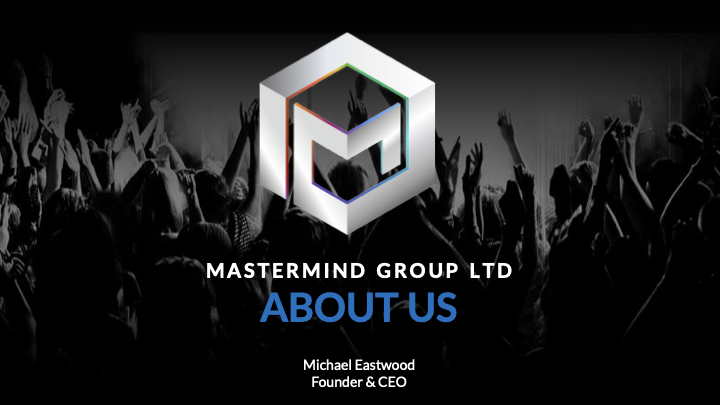
The corporate strategy and implementation plan, dated 10 December 2023. Held in full; the cover is shown. This is the document that puts the clientele at over 350 artists, names the clients quoted in the row above, and specifies the Establish and Flourish System as the first module of the Academy curriculum. Where this page cites it, it quotes rather than paraphrases.The pitch deck of the same date. Held in full; the cover is shown. Investor documents are written to persuade, which is exactly why the CRM report above, and not this deck, is what carries the revenue claim on this page.
the public record
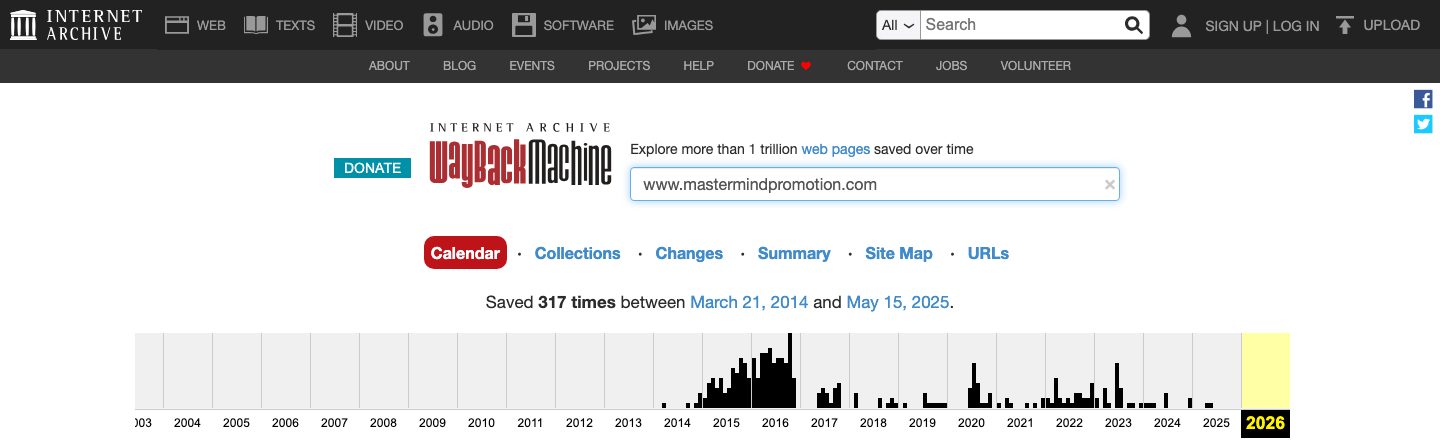
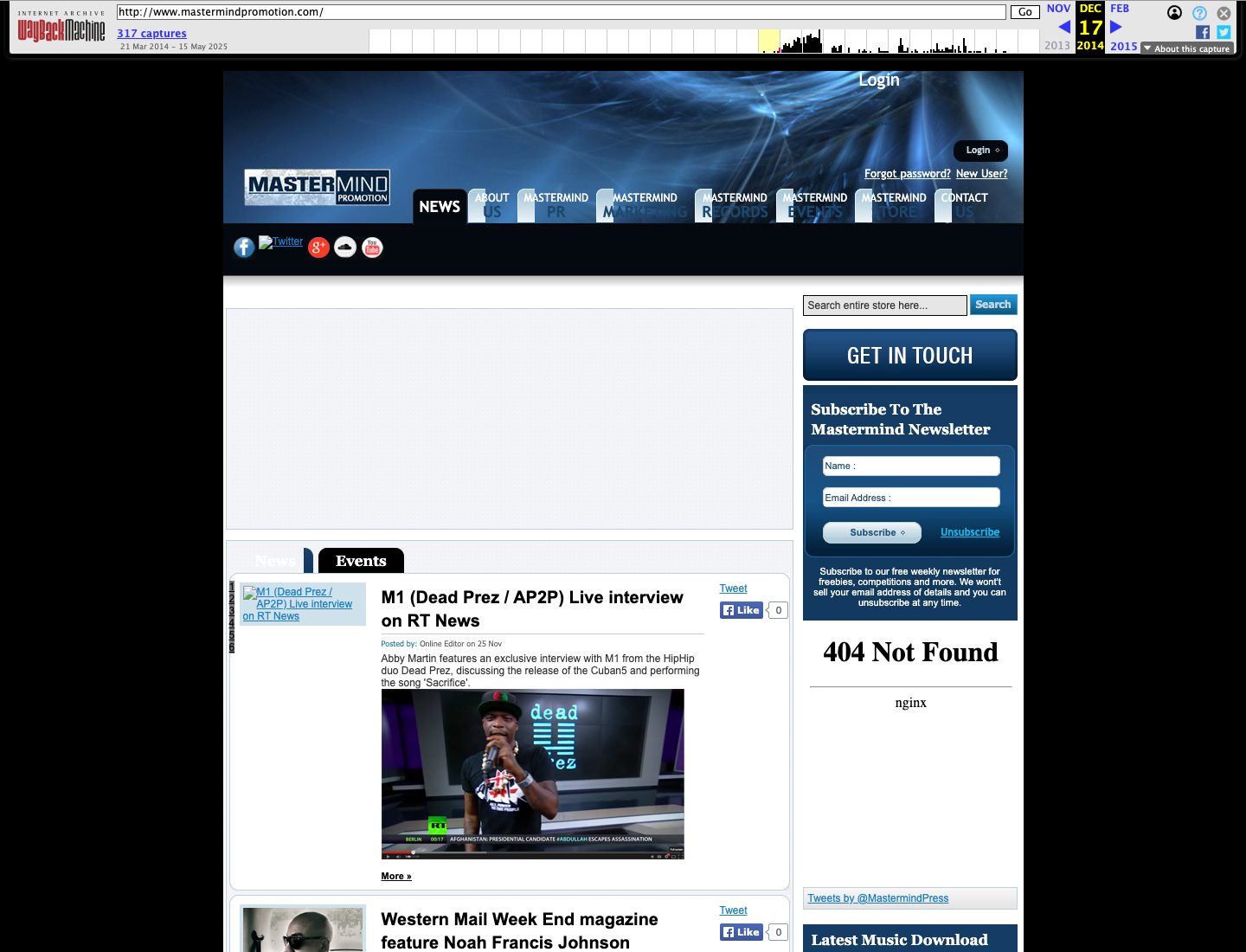
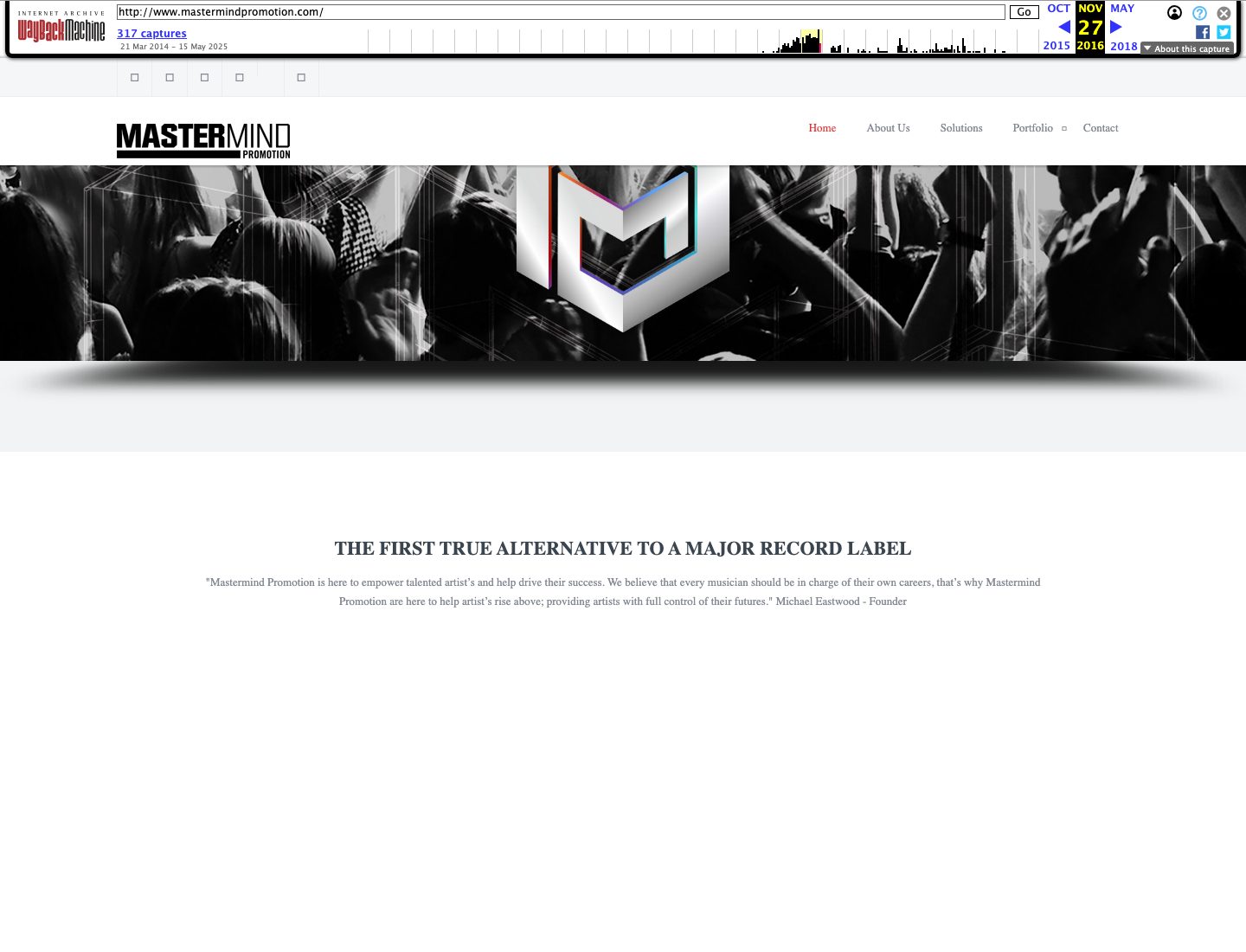
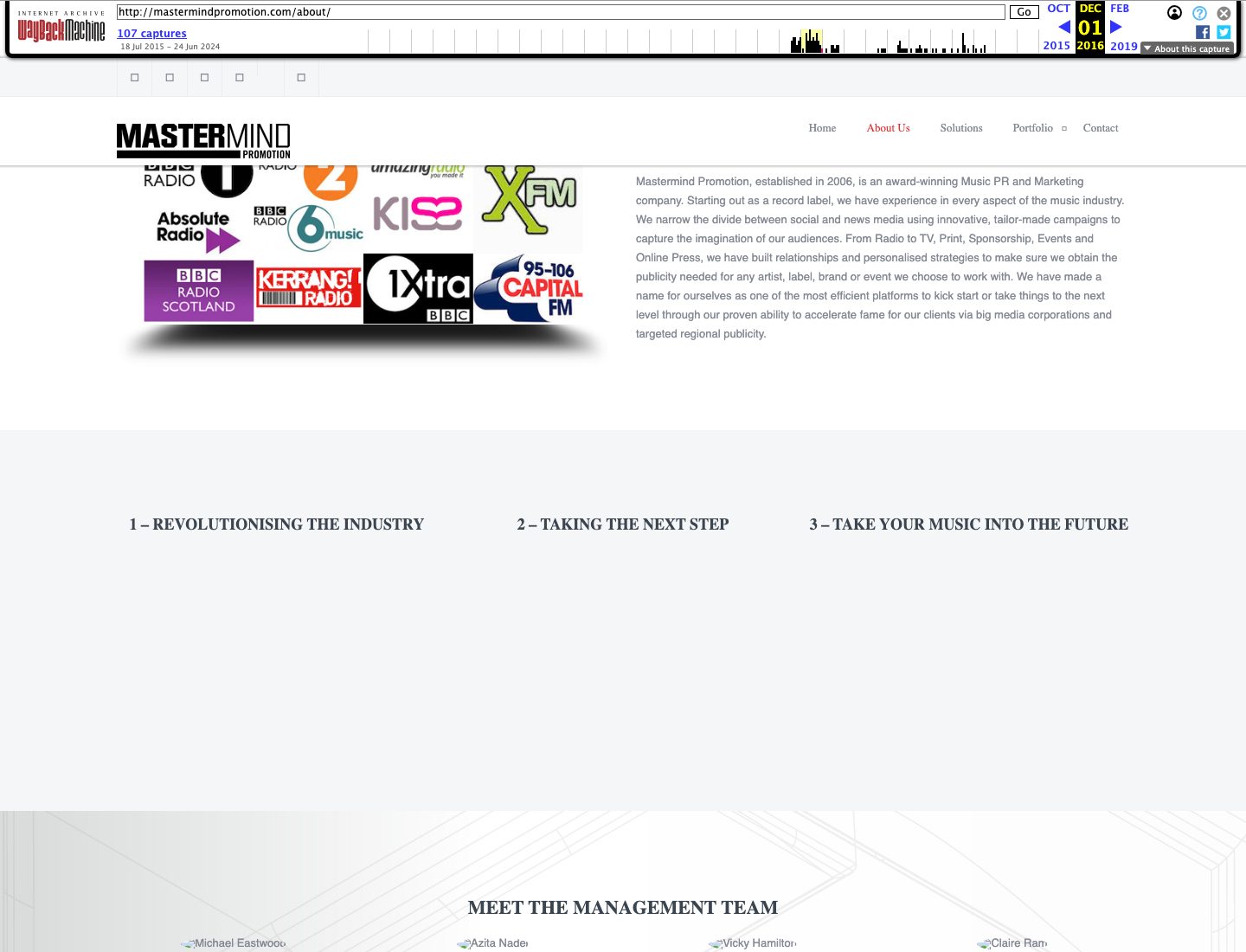
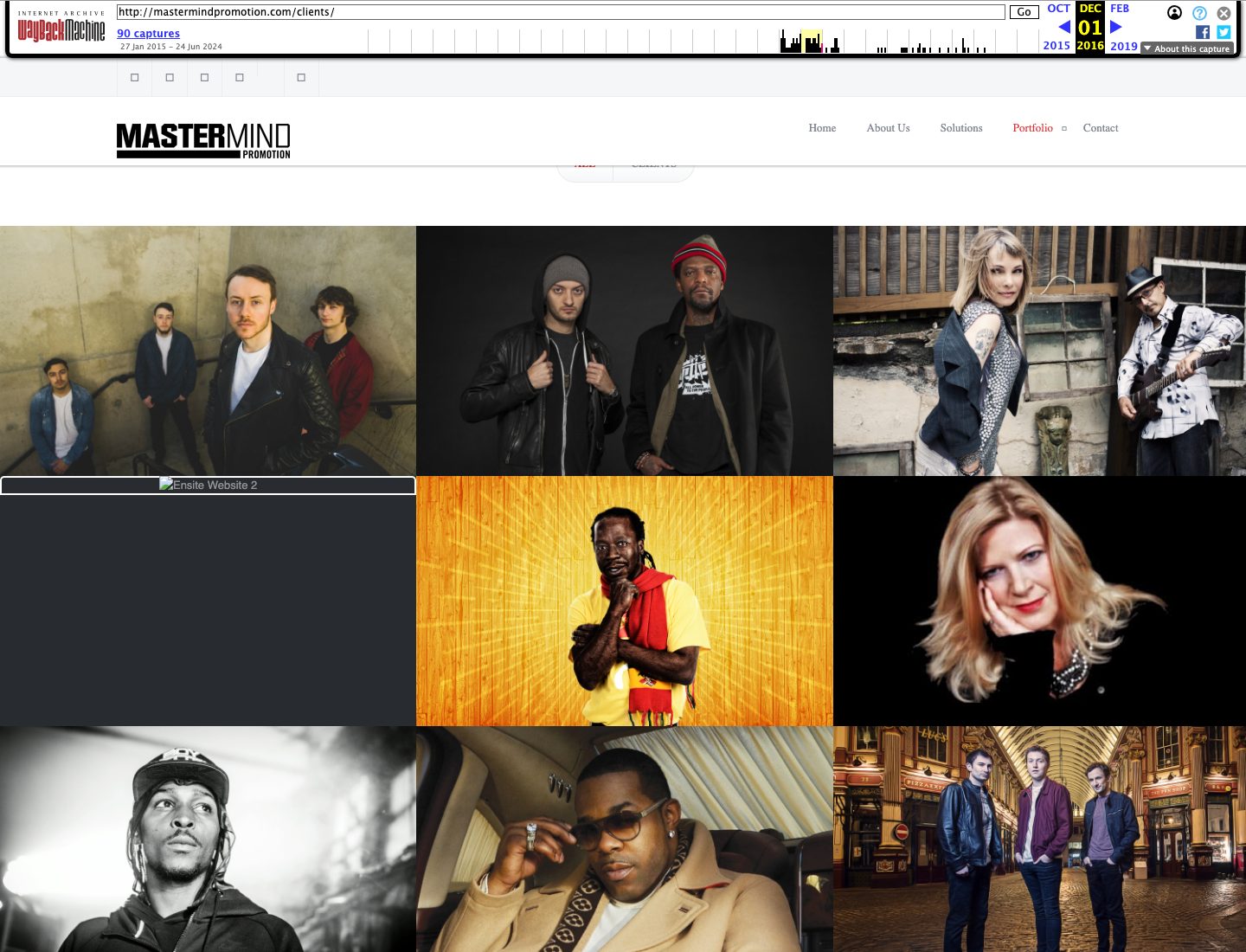
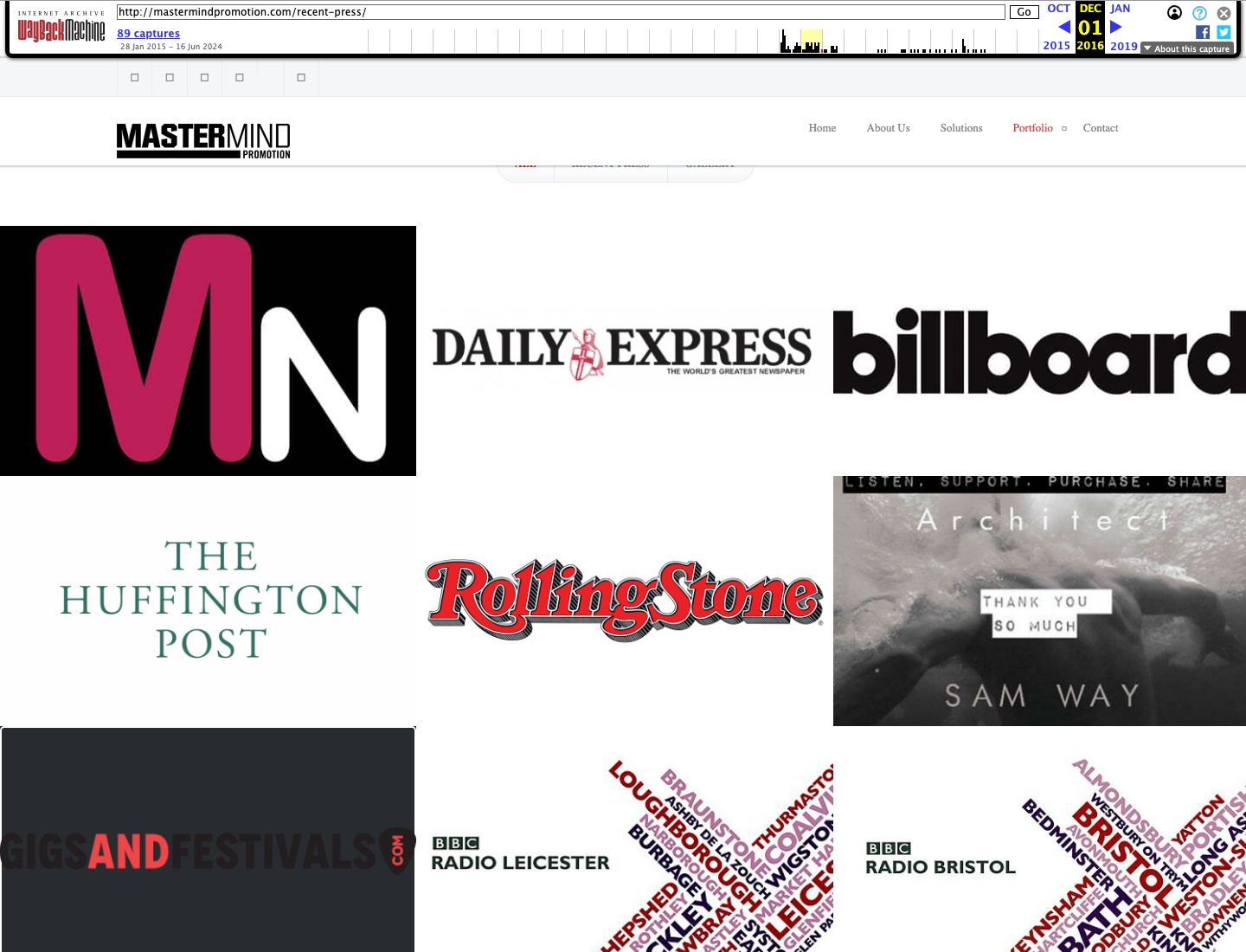
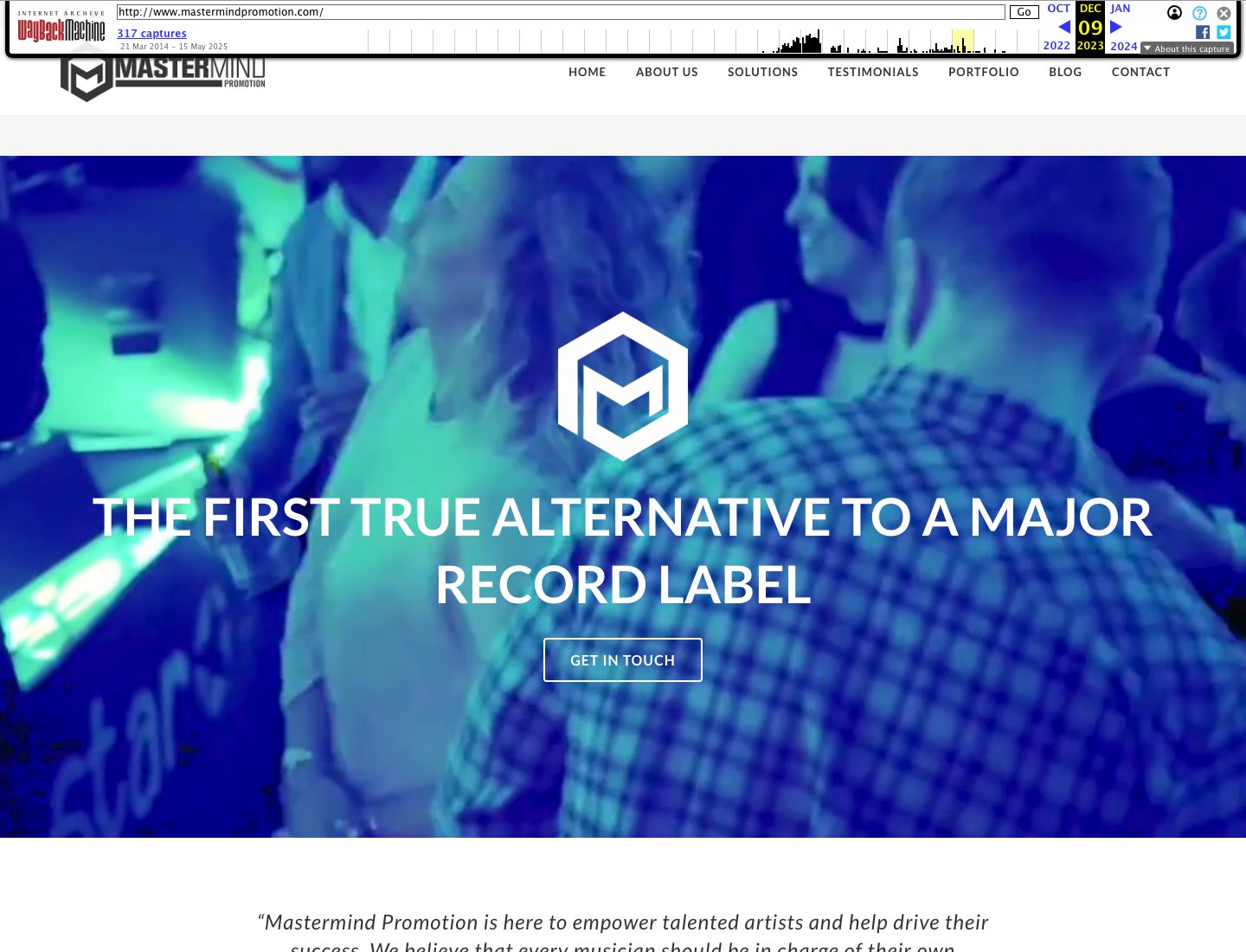
Mastermind Promotion’s website, www.mastermindpromotion.com, is on the public record, and not only in my files. The Internet Archive’s Wayback Machine holds 317 captures of its home page, the first on 21 March 2014 and the last on 15 May 2025, and 19,828 captures of its pages in all, across 4,429 addresses, counted at the archive’s own index on 4 October 2026. Each capture is dated by the archive’s crawler, not by me, so anyone can open the site as it stood on a given day and read what it said. The home page carried the same line in 2016 and in 2023, and it is the subtitle of the strategy document above: the first true alternative to a major record label. Telephone numbers and email addresses in the captured headers are masked in the images below; the captures themselves are unaltered.
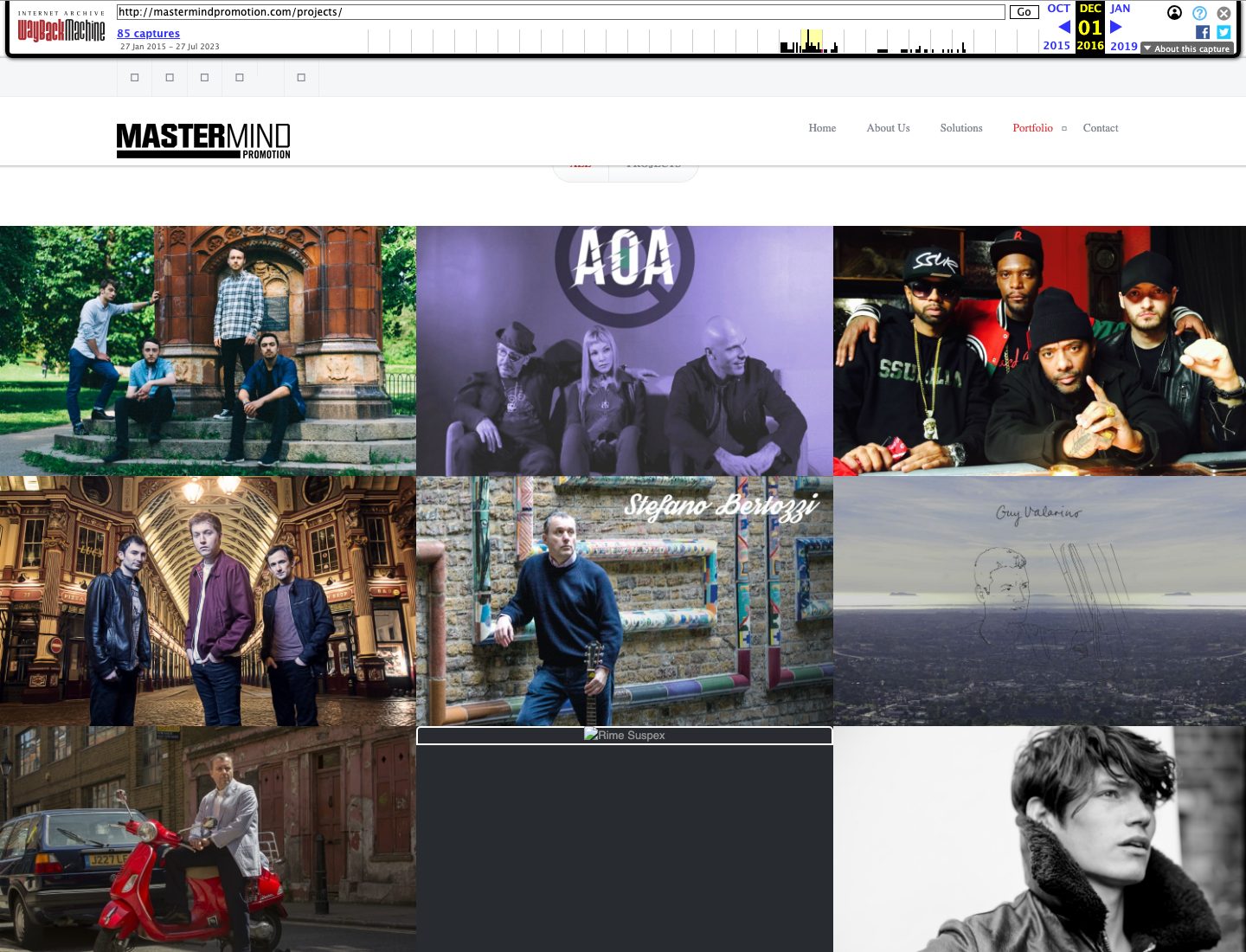
The archive’s own count. The Wayback Machine’s calendar for the site, read on 4 October 2026: saved 317 times between 21 March 2014 and 15 May 2025, with the captures by year in the bars.The home page on 17 December 2014. The toolbar is the archive’s, with the capture date; the page is the company’s, its news column led by an interview with M1 of Dead Prez on RT News.The home page on 27 November 2016. The line at its centre, the first true alternative to a major record label, above a statement signed by me as founder.About Us on 1 December 2016. “Established in 2006”, in the company’s words of that date, beside the radio stations it showed as logos, with a management team that lists Vicky Hamilton.Clients on 1 December 2016. The artists the company presented in its portfolio grid on that date.Recent Press on 1 December 2016. The outlets the company listed for its campaigns, Rolling Stone, Billboard, The Huffington Post, the Daily Express and BBC local radio among them: its own list, dated by the archive.Projects on 1 December 2016. Campaign artwork from the company’s portfolio, some of it naming its artists in print, Stefano Bertozzi and Guy Valarino among them.The home page on 9 December 2023. A new design and the same line, captured the day before the strategy document above was dated.
the accounts
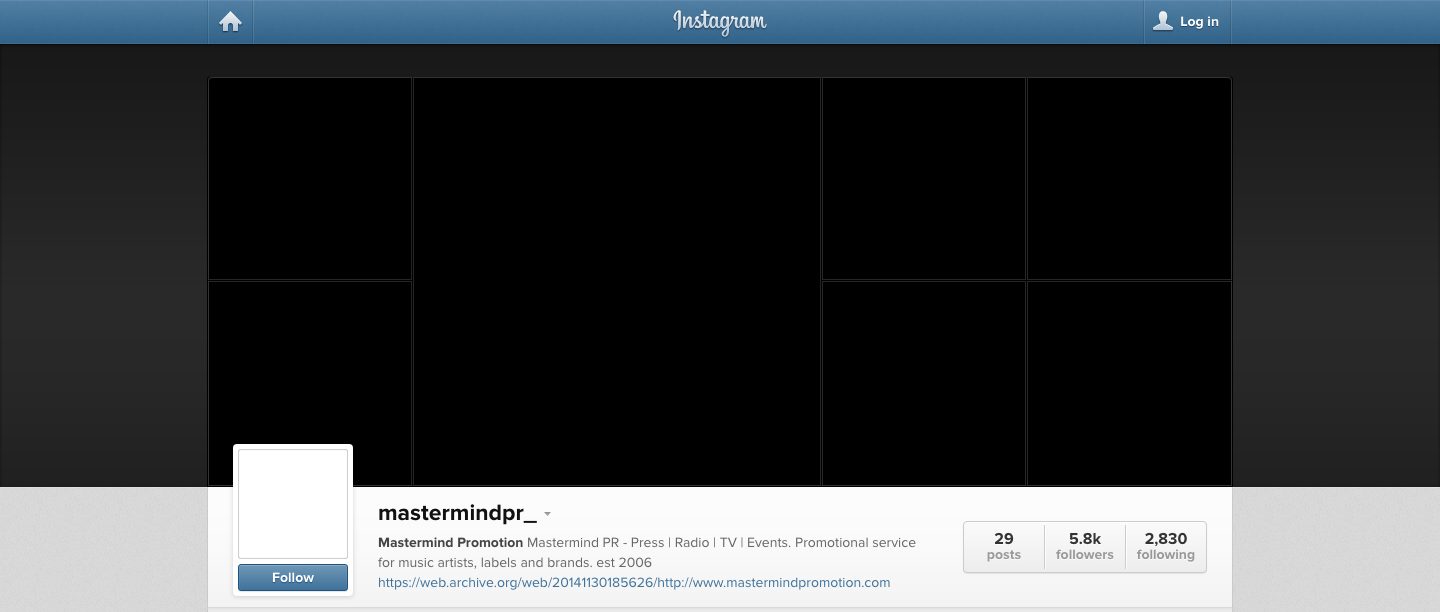
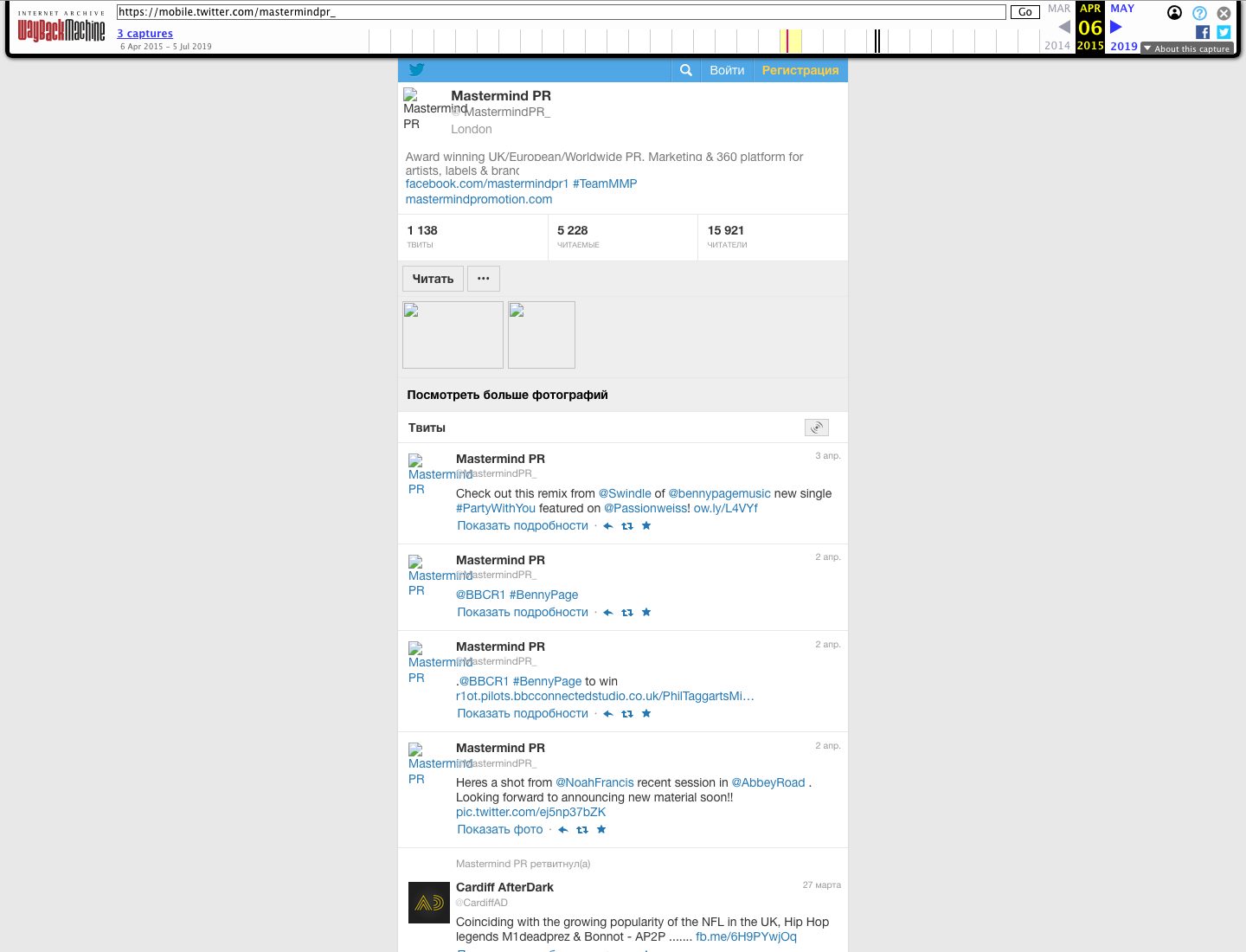
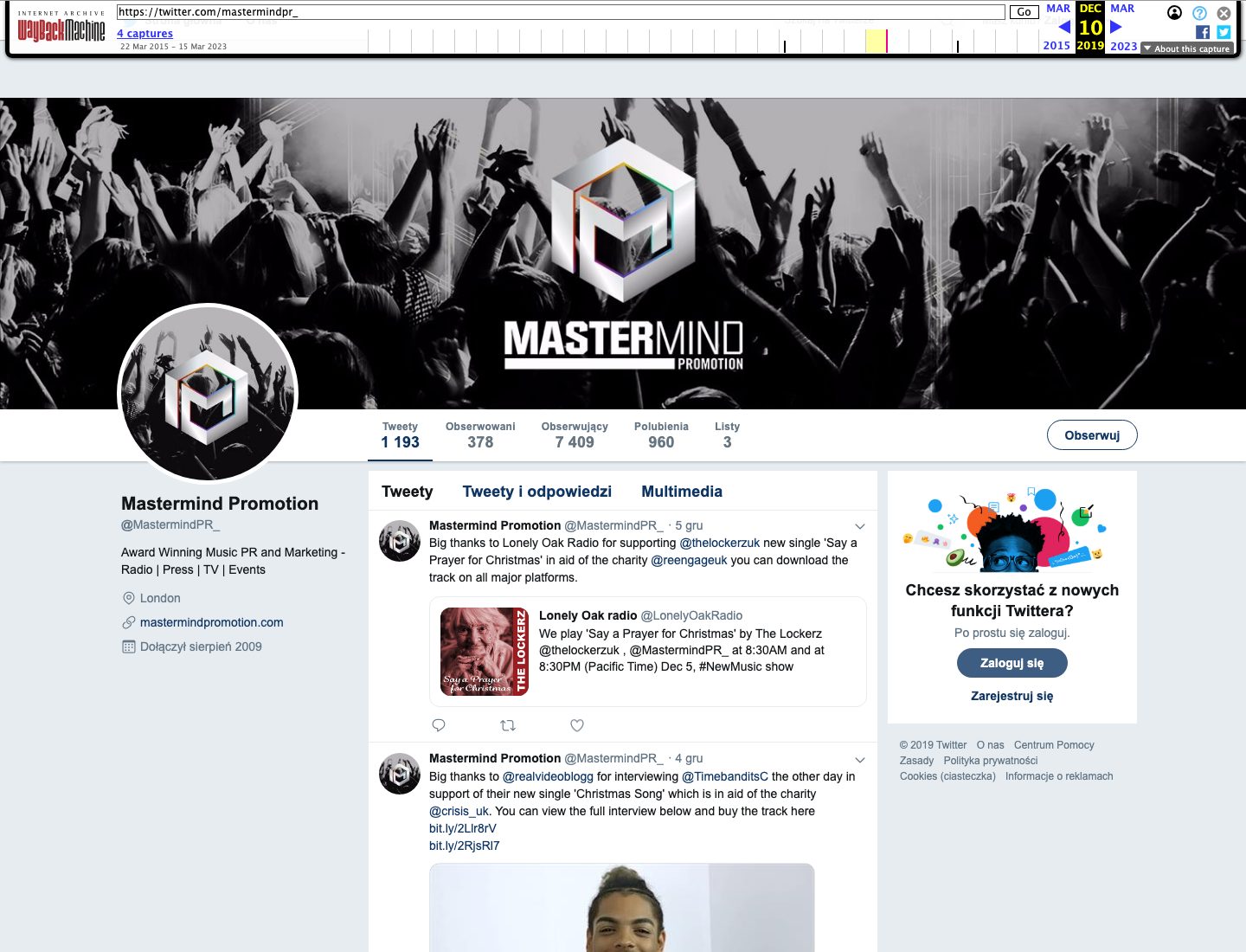
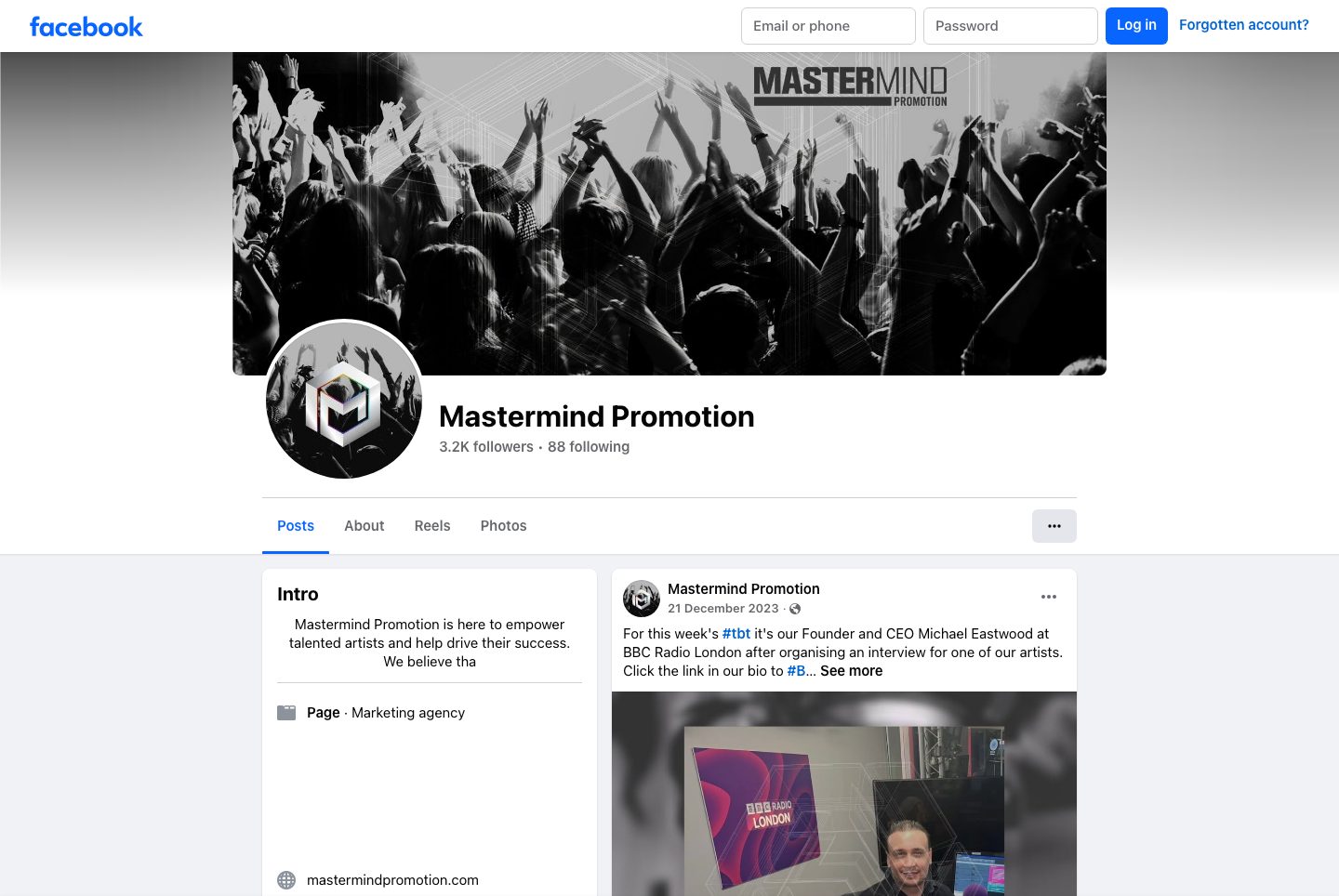
The company’s social accounts carry their own dates. The Twitter account @MastermindPR_, which Twitter records as joined in August 2009, has 1,209 captures in the archive between 22 March 2015 and 15 March 2023, among them 1,061 of its posts captured one by one. The archive holds the Instagram account mastermindpr_ as it stood on 30 November 2014, describing the company as established in 2006, and the Facebook page, facebook.com/MastermindPR1, is still public, read on 4 October 2026. The same masking applies here, with the postal address in the Facebook introduction.
Instagram, 30 November 2014. mastermindpr_: “Press | Radio | TV | Events. Promotional service for music artists, labels and brands. est 2006”, with 29 posts and 5.8k followers; the archive kept the header, not the photographs.Twitter, 6 April 2015. The mobile profile, in the archive crawler’s interface language: 15,921 followers, and posts naming BBC Radio 1 and Benny Page, and a Noah Francis session at Abbey Road.Twitter, 10 December 2019. @MastermindPR_, “Award Winning Music PR and Marketing” in its own description, joined August 2009 by Twitter’s record, with 7,409 followers and two charity singles in its latest posts.Facebook, read live on 4 October 2026. 3.2K followers, and the page’s post of 21 December 2023: “our Founder and CEO Michael Eastwood at BBC Radio London after organising an interview for one of our artists.”
where this is still weakestThe 2022 sum of sales payments from clients is shown as well as stated: the CRM report above is its source record, and it reads £624,568.79. The 2015 sum is stated and not shown. It is the earliest year on my own revenue sheet, which I hold and have not published; the sheet’s figure for 2022 is the report’s sum without the pence. What is still missing is an accountant standing behind either sum. A CRM report is the company’s own system, not an audited account. The filed accounts cannot stand in for one: the trading company’s last accounts at Companies House are made up to 31 July 2020, so none covers 2022. Both sums are recorded. Neither is audited. Press cuttings for the Rolling Stone, Times and BBC placements are also still to be published, and so is the campaign correspondence for the named clients: the emails arranging the placements are held and unpublished. The company’s own websites are now offline, so of its public record the photographs, the two documents and the anniversary video are what survive, and this page says so rather than linking to pages that no longer resolve.
where this is weakest
It ended, behind a padlocked door, with revenue down 99.1 per cent in the aftermath. A business that collapsed is evidence of what was built and also evidence that it did not survive, and both belong on the same row.
Music, on stage and behind the camera
the bar
Billed alongside people the field already rates, in front of audiences that can be counted. For directing: productions at a scale that requires a crew.
the evidence
Shown rather than described: the decks, the crew, the floor of a shoot, and the room. The music was drum and bass, named here because a genre is checkable and “DJ” on its own is not.
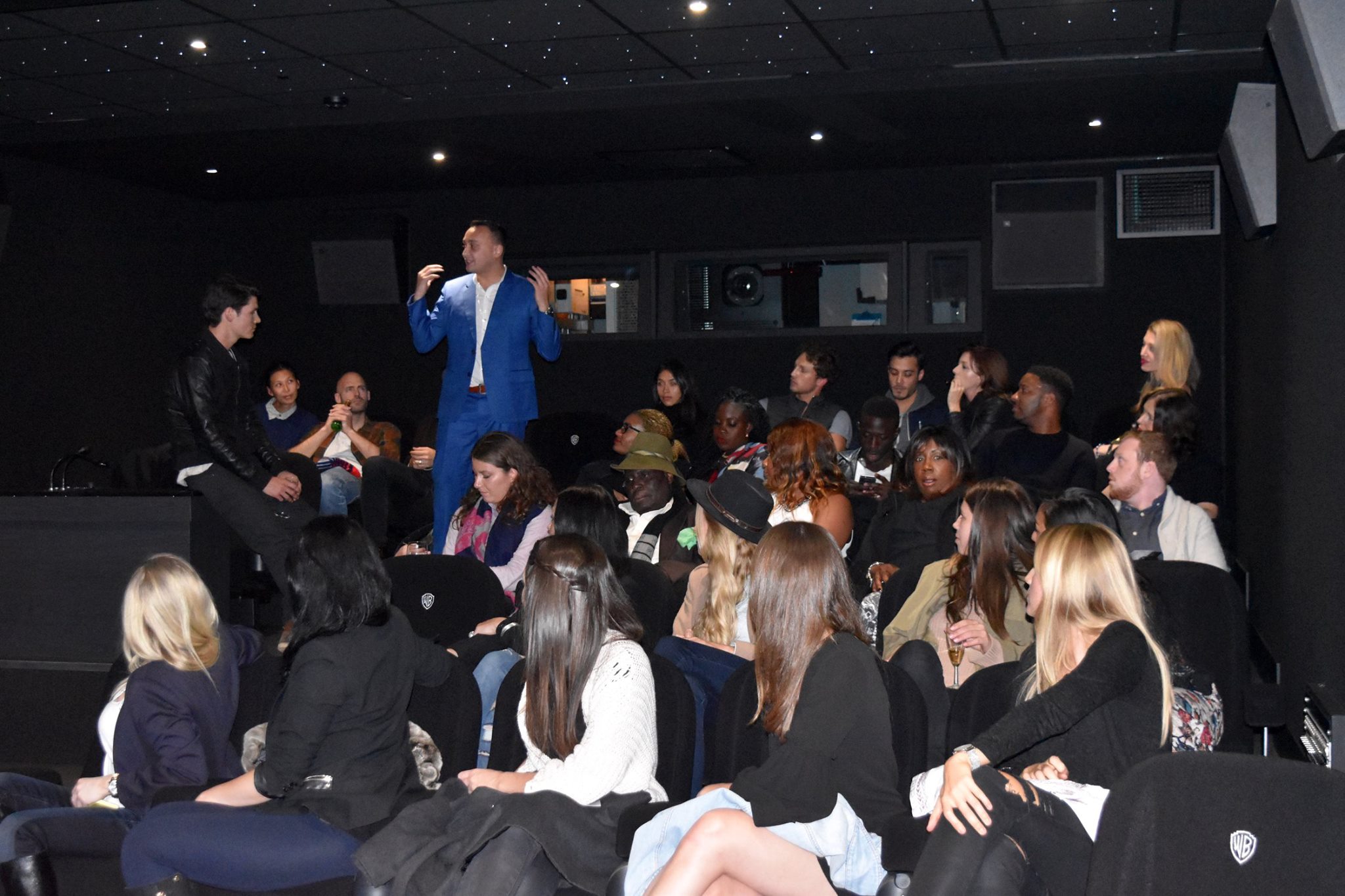
On the decks beside Andy C. The genre’s biggest name, and the claim in the row above photographed at the mixer rather than asserted.With Shy FX, under the label’s own banner. The shirt and the backdrop both read Mastermind Records, which is the label half of the company photographing itself: the artist, the decks, and the brand in one frame.Behind the decks. Drum and bass, mixed on turntables at roughly 170 to 175 beats per minute, which is most of the reason the genre is a harder mix than the tempo alone suggests. Not holding a record for a photograph: hands on the mixer, headphones on, mid-transition.A crew, which is the bar this row states. Around twenty-two people and a cinema camera rig. Scale is the part that cannot be faked by one person with a phone.Warner Brothers studio, screening room, full house. An audience that can be counted, which is the other half of the bar.
where this is still weakestThe photographs evidence the doing and the scale. They do not carry dates, billings or production titles, and until those are here this row shows more than it proves. Treat the pictures as what they are: better than an assertion and short of a record. The remaining material exists and is not prepared for publication yet, and saying so is cheaper than being caught implying more.
Litigation
the bar
For a litigant in person, above average is not turning up. Anyone may turn up. It is operating the procedure well enough to hold a represented opponent to the record.
the evidence
Eleven appearances as my own advocate in the High Court, the senior court of first instance in England and Wales, against opponents who are represented throughout. Two specific things that do not require winning. First, the defendants applied for a stay of proceedings without having filed a defence; I applied for default judgment, alternatively summary judgment. No defence has been filed in nearly two years. Second, using the approved transcript, I demonstrated that a witness statement filed by the opposing solicitor asserted the hearing had ended the matter. That hearing was an application for an interim injunction, not a trial of anything, and the approved transcript of it records at paragraph 50 that "it however remains open to the claimants to bring a substantive claim." The characterisation was not a matter of interpretation; the transcript of the same hearing said the opposite.
where this is weakest
I have not won yet, and nothing here claims otherwise. The matters are live and I am continuing them. That distinction is not a consolation, it is what the record says: the case statuses are stays, pending applications and matters not determined, rather than findings against me, and a delay is a procedural fact rather than a loss. What this row claims is competence in the procedure. It claims nothing about the outcome, which is undecided and could go against me. That caution is procedural, not a doubt about the merits: both defendants have made formal admissions on the court record, and what remains undecided is what the process does with them. Procedure can lawfully delay, divert or dispose of a case without ever reaching what was admitted, which is precisely why this row watches the procedure. Anyone treating an interim refusal as a final determination is making exactly the error the record already documents against the other side.
check it
The transcript passage, the filed statement and the contradiction are set out in the case record with dates and paragraph numbers. A self-taught litigant catching a represented firm against its own hearing transcript is either true or it is not, and it is checkable either way.
What would prove this page wrong
Show that any bar above was set after the evidence rather than before it. Show that a claimed above-average standard was ordinary in its field. Show that a row states something the linked record does not support. Or show that a row quietly omits an outcome that went against me.
Any of those, and the row goes or gets corrected in public with the date on it, the same way the retraction did. The point of stating each bar first is that this page can be checked rather than argued with.
If none of that is why you came
Then this page has done its job and it is the least interesting thing here. It exists for one reason: to stop the range being the argument, so that the work can be. Most people who arrive at it were sent by a single word in a byline, and the honest thing to say is that the word settles nothing on its own.
What the fields were for is on why. What they produced is the research programme, which publishes in advance what would end each claim, and the corrections page, where my own headline number sits retracted because it failed replication and I put it there. If you only open one, open the corrections. It is the shortest page on this site and it tells you more about whether to trust the rest than anything above.
ListenListen · author’s voiceListen · standard voiceResumePlayPauseThis device has no voice installed for this language, so it cannot read the page aloud.Read in EnglishListen · author’s voice (English)The author’s English voice reads aloud; the text on screen stays in your language.There is a picture here. It shows:Picturereads aloud · highlights as it goes · jump to any section