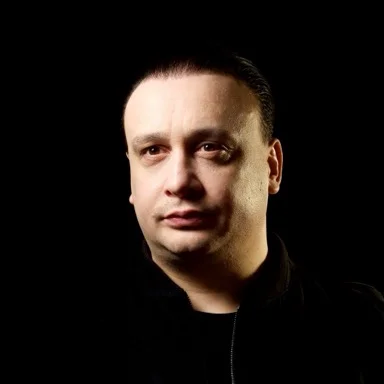
Michael Darius Eastwood · Independent AI alignment researcher
Published
Paper X argues that the standard reflex to a self-improving AI, cap the growth rate, has been pointed at the wrong variable. Stability depends not on how fast the system grows but on whether its correction machinery grows at least as fast as its drift acceleration. That is a smaller and more testable claim than the programme's earlier framings, and it explicitly supersedes one of them as the operative safety criterion.
If an AI improves itself in a loop, what governs whether it stays alignable? The dominant safety intuition is "slow it down": pause the run, cap compute, forbid super-linear growth. Paper X models a minimal self-modifying system (a capability C, a blind-scored misalignment magnitude D, and their ratio d) and asks whether the level of the growth rate really decides the outcome, or whether the answer lies in the scaling relationship between drift and correction.
Seven theorems within the model. In the additive channel the misalignment fraction never diverges; it either vanishes, holds a permanent gap or saturates at the drift coefficient γ1. The boundary between the three regimes is exactly β greater than k, where β is the exponent with which correction strengthens as capability rises and k is the exponent with which drift acceleration rises. Under a genuine hard takeoff (capability reaches infinity in finite wall-clock time), a change of clock renders the alignment dynamics regular and the verdict is still set by β greater than k. Genuine divergence lives only in a distinct compounding channel whose threshold shares the ratio-crossing-unity form of the quantum error-correction sub-threshold criterion. A ten-experiment verification harness confirms the code matches the maths, ten out of ten internal checks.
This is a self-correction paper. The programme's earlier fixed-exponent framing of U = I × Rα as the operative safety criterion is superseded here, and Paper IX's growth-rate-ceiling framing is superseded. The equation itself and the ARC Bound alpha at most 2 remain live hypotheses; only the earlier unblinded single-model fit of alpha approximately 2.24 was retracted, corrected to approximately 0.49 under blinding. The current operative quantitative safety claim is the β greater than k co-scaling stability condition. Important honest limits remain. The corrector is assumed to be an unbounded power law; a finite-capacity corrector would eventually saturate, and the criterion would fail asymptotically. The quantum-error-correction correspondence is offered as a threshold-form analogy, not a transferred mechanism, because the model's suppression law is power-law rather than exponential. The harness is an internal-consistency check, not an empirical test. The first real-model pilot ran on a same-family scorer and did not meet the paper's own blinding bar, so its numbers are provisional and no β has yet been measured on a real drifting system.
Paper X is the intended keystone of the ARC/Eden programme. It inherits its capability curve C(t) from Papers I and II (currently sub-linear on hard tasks), generalises Paper III's decoupled corner (β equal to 0) into a full criterion, cashes in Paper VI's Honey Architecture and Paper VIII's gated simulation as demonstrations of a coupled corrector, and enforces Paper IV.d's blinding law in its real-model harness. It explicitly supersedes Paper IX's rate-ceiling proposal.
The paper HTML and PDF sit on OSF at DOI 10.17605/OSF.IO/6C5XB. The verification harness lives at github.com/MichaelDariusEastwood/arc-principle-validation as experiment_coscaling.py plus a pytest suite. A runnable estimator for β and k is provided, validated on synthetic trajectories to within 0.04. Falsification conditions F1 through F6 are stated in advance; F4 in particular flags a finite-capacity corrector as the experiment that would settle the quantum-error-correction mechanism question.
From the book Infinite Architects: Intelligence, Recursion, and the Creation of Everything by Michael Darius Eastwood.