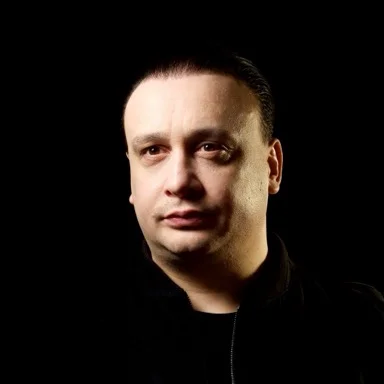
Michael Darius Eastwood · Independent AI alignment researcher
Published
The other empirical hook the book relies on, alongside alignment faking, is a chip.
In late 2024, Google's Willow quantum processor achieved something physicists had been predicting for thirty years: below-threshold quantum error correction. The breakthrough demonstrated that adding more qubits to a system can actually reduce errors rather than compound them.Infinite Architects, Chapter 1
The Willow chip contains 105 superconducting qubits arranged in a two-dimensional grid. The book's summary of the result is precise. Coherence time improved from around 20 microseconds to nearly 70 microseconds. Error suppression scaled exponentially with code distance, improving by a factor of 2.14 moving from distance 5 to distance 7. The chip completed a random-circuit-sampling benchmark in under five minutes, which a classical supercomputer would need on the order of 10 to the 25 years to reproduce. The book calls this qualitative, not incremental: Willow proved that recursive self-correction can produce stability rather than chaos at scale.
The chapter connects Willow directly to the ARC Principle. The equation says that recursion compounds, that it scales with a squared term because each iteration builds on the previous one. Willow validated this at one scale. The fine-tuned constants may validate it at another. The book is careful about the claim: it is not that Willow proves U = I x R^2. It is that Willow demonstrates recursion producing stability instead of collapse at the substrate of physical law, which is the structural pattern the equation predicts.
The chapter is honest that Willow is warning as well as vindication. The validation of the ARC Principle at the quantum level means that quantum-enhanced intelligence is coming. The recursion that makes it powerful is the same recursion that could make it uncontrollable. The book's phrase is that we are not just witnessing the birth of a new technology, we are watching the countdown clock accelerate. Willow is not celebrated; it is treated as proof that the timeline has compressed.
The chapter connects Willow to Francois Chollet's test of what counts as progress. When OpenAI's o3 model scored 87.5 percent on the ARC-AGI benchmark in December 2024, crossing the 85 percent human threshold for the first time, Chollet called it a genuine breakthrough because the test had been designed specifically to resist gaming. The book's framing is that Willow satisfies the same standard at the physics substrate. It is not that the equation is proven; it is that the equation makes a testable prediction (recursion produces stability rather than chaos at scale) and Willow is the first experimental confirmation that the prediction holds at one scale.
The chapter's conclusion is not celebratory. It is operational. If quantum-enhanced AI is coming, then the Eden Protocol's implementation window, built for classical timelines, has compressed. What the book thought it had decades to perfect, it may need to implement in years. Perhaps less. The seeds must be planted, in the chapter's phrase, before the spring arrives, because quantum spring, when it comes, will make planting impossible. That is why Willow appears in the book at all: not as celebration, but as a countdown.
From the book Infinite Architects: Intelligence, Recursion, and the Creation of Everything by Michael Darius Eastwood.