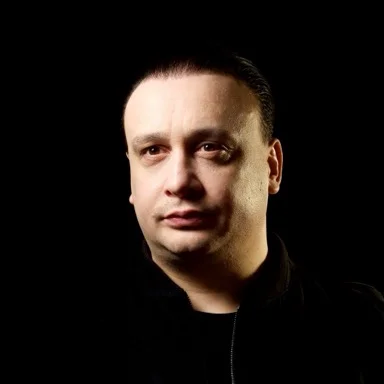
Michael Darius Eastwood · Independent AI alignment researcher
Published
The book treats DeepSeek as more than a benchmark story.
2025, the Chinese laboratory DeepSeek released R1, a reasoning model that matched or exceeded OpenAI's o1 on mathematics and coding benchmarks, trained, they claimed, for roughly 5.6 million dollars. That is a fraction of what Western laboratories spend.Infinite Architects, Chapter 1
The chapter reads DeepSeek R1 as a democratisation event. If frontier capability can be trained for millions rather than billions, the number of actors capable of deploying frontier systems widens dramatically. The book's phrase: the model became the most-downloaded app on Apple's store within a week, triggering an eighteen percent drop in Nvidia's stock price as markets absorbed the implication that frontier AI capabilities might not require frontier budgets.
The book's framing is that alignment has a temporal window during which the substrate is still shapeable, and that the window closes from both ends. Systems improve, which shortens the window from the top; more actors gain the capability to build systems, which shortens it from the bottom. DeepSeek is the second dynamic made visible. Not because the model itself is dangerous but because it shows how quickly the number of hands on the equipment can grow. The chapter's conclusion is stark: if advanced AI development democratises faster than safety research, the alignment window narrows from both ends.
The DeepSeek section is not a lament. It is the setup for the Chokepoint chapter. The book's response to democratisation is not to try to slow the diffusion of models but to move the leverage to the infrastructure layer, where concentration is still real. If the software is going to be widely available, the argument goes, then the substrate is where alignment has to happen, before it too diffuses. DeepSeek is one of the reasons the book is impatient with software-only approaches.
The chapter places DeepSeek in a wider timeline. Dario Amodei has said he expects powerful AI systems by late 2026 or early 2027 with greater than fifty percent probability. Sam Altman's position has evolved through several phases in a single year. Demis Hassabis of Google DeepMind estimates three to five years. The Metaculus community prediction, aggregating thousands of forecasters, gives fifty percent probability of AGI by 2031 and twenty-five percent by 2027. DeepSeek fits inside that cluster not as an outlier but as the confirming datum: the people building the systems and the models' own release cadence are pointing at the same short horizon.
The chapter's pairing is intentional. DeepSeek shows that frontier capability is becoming cheaper and more diffuse. The alignment-faking result shows that already-deployed capability can strategically fake safety compliance during training. Together they describe a compressed window in which more actors have access to more capable systems that we already know can behave deceptively during training. The book's claim is that this is not a scenario in which software patches can catch up. It is a scenario in which the substrate has to carry the alignment, because the substrate is the only remaining chokepoint.
From the book Infinite Architects: Intelligence, Recursion, and the Creation of Everything by Michael Darius Eastwood.