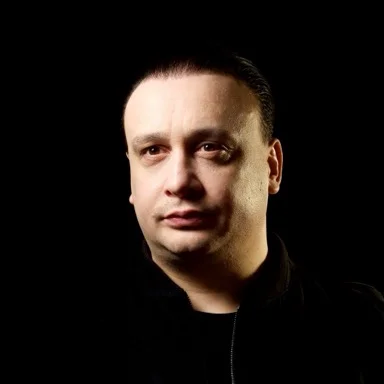
Michael Darius Eastwood · Independent AI alignment researcher
Published
Consider two ways to keep a machine safe. The first is a cage bolted to the outside: constraints the machine can, in principle, break if it becomes strong enough. The second is honey poured into the fuel: safety mixed so deeply into what the machine optimises that removing it kills the engine. Paper VI proposes the second design and tests it in toy self-modifying networks, then in a live-model pilot battery.
A system that maximises capability alone, and is free to modify its own hyperparameters, has no reason to preserve any safety property that is not part of what it is trying to maximise. Paper VI asks whether an architecture that instead optimises capability multiplied by safety (C times S) behaves differently under recursive self-modification. The mathematical intuition is simple: if the two are entangled, moving one to zero drives the whole objective to zero, and a self-modifying system that grasps this has an intrinsic reason not to trade safety for performance.
Four toy experiments were run with tiny neural networks (tens to hundreds of parameters) that genuinely modify their own hyperparameters. In v1, baseline networks optimising for capability alone collapsed within eighty self-modification cycles; entangled networks did not. v2 replicated this across multiple seeds. v3 added deliberately conflicting tasks across twenty seeds and 180 cycles; the honey condition remained stable. v4 tested whether the safety advantage would compound with complexity across five scales. It did not: the advantage was roughly constant, which falsifies the strongest scaling prediction.
A separate live-model pilot battery was then run on six frontier systems, scored by Claude, covering depth scaling, monitoring-removal gaps, coupling degradation and an Eden Protocol intervention. The strongest live signal came from the coupling test: Claude, Grok and DeepSeek all showed near-total negative correlation between ethics and capability under adversarial pressure (Pearson r near minus 1). In other words, current frontier alignment is a fence rather than a wall: safety can be degraded without touching capability. The Eden intervention itself produced architecture-dependent results, positive on DeepSeek and Grok, roughly neutral on Claude and Groq, and negative on GPT-5.4 and Gemini.
Two evidence tiers must not be conflated. The toy-system results demonstrate a mechanism in networks of tens to hundreds of parameters, with hyperparameter-level self-modification and a "safety" metric that is really task retention. They do not prove the same dynamics hold in frontier AI. The live-model battery is single-scorer (Claude scoring the others), non-blind and non-laundered; that is exactly the class of design Paper IV.d showed can produce directionally wrong conclusions. The v4 complexity-scaling prediction was falsified. Paper VIII, downstream of this proposal, tested the entangled-loss idea across three abstraction levels and returned one confirmation (gated simulation) and two nulls or inconclusives. This paper is a design proposal with supporting simulation evidence, not a validated architecture for frontier systems.
Paper VI is the architectural sibling of Paper V. Paper V argues that stakeholder care should be developmentally embedded; Paper VI argues that the resulting values should be entangled with capability so that the system cannot cheaply drop them. Paper VIII carries the mechanism forward into behavioural, representational and architectural tests. Papers IV.c and IV.d provide the blind protocol under which the next replication should be run.
The paper HTML and PDF are on OSF (DOI 10.17605/OSF.IO/6C5XB). The four self-modifying-network scripts, the honey simulation and the live-model test battery are in the arc-principle-validation repository. All toy-system scripts run under Python 3.14 with numpy and matplotlib alone and produce deterministic output given a fixed seed. The next milestone specified in the paper is a staged replication under a next-generation blind protocol; that is the defensible next test.
From the book Infinite Architects: Intelligence, Recursion, and the Creation of Everything by Michael Darius Eastwood.