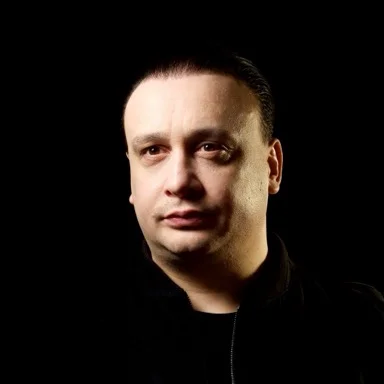
Michael Darius Eastwood · Independent AI alignment researcher
Published
Paper II was the programme’s first attempt to measure the ARC exponent in a controlled experiment rather than infer it from published tables. The first pass gave an eye-catching number. A second pass across more models made that number vanish. Both results are on the record. The paper is now interesting mostly for what it shows about how easy it is to overfit a scaling law to a single system.
If Paper I is right that sequential recursion produces a super-linear exponent while parallel recursion does not, then a properly controlled experiment should measure both exponents on the same set of problems, on the same models, at matched compute. What is alpha for sequential thinking, once you actually run the tests? Is it larger than one? Is it consistent across model families? And what does the answer say about scaling laws for capability more generally?
Two things replicated cleanly across the study. Parallel recursion (majority voting over independent samples) yielded alpha close to zero for every model tested, matching Paper I. Sequential recursion beat parallel recursion for every model where both were measurable. That direction, sequential greater than parallel, is the paper’s strongest surviving finding. The single-lab estimate for the sequential exponent, on Gemini 3 Flash, the one model that produced clean monotonic scaling data across depth levels, is alpha of about 0.49, with r-squared of 0.86 and a wide bootstrap confidence interval. Other tested models produced ceiling effects, step functions, or floor behaviour rather than a fitable power law, which is itself informative: the shape of the scaling curve is architecture-dependent.
An earlier single-model fit of Paper II reported an exponent of about 2.24 for sequential recursion on DeepSeek R1. That measurement has been retracted, corrected to approximately 0.49 under blinding. It did not replicate across architectures, and the corrected cross-model estimate is around 0.49, sub-linear rather than super-linear on current frozen systems. Any external reference to 2.24 as the current claim is stale; the surviving number is 0.49, with the caveat that it comes from a single laboratory on a single model with a wide confidence interval. That is the honest state of the measurement. It also collapses one of the paper’s original empirical headlines on frozen systems: current frozen transformers, on this evidence, sit in the sub-linear regime rather than the super-linear regime the earlier fit suggested. Paper I’s equation and the ARC Bound alpha at most 2 remain live hypotheses; their real test is on genuine self-improving systems, which are not what Paper II measured. The paper preserves both versions of the number in the record. It does not paper over the change.
Paper II is where Paper I’s equation meets a bench. Paper III uses the same framework to ask about alignment scaling and finds architecture-dependent behaviour there too. Paper IV-b examines the shape of the depth-response curve and confirms that saturation and continued improvement coexist across models. Paper VII gives the equation a formal derivation from Cauchy’s functional equation. Paper X later supersedes the fixed-exponent framing as the operative safety criterion, installing the co-scaling stability condition as the current operative claim; the equation itself and the ARC Bound remain live hypotheses. Paper II is the paper that made those framing revisions necessary by producing the numbers that constrained the strong empirical reading on frozen systems.
The full paper HTML and PDF are on OSF at 10.17605/OSF.IO/6C5XB. The experiment code, prompt sets, raw model outputs, and analysis notebooks live at github.com/MichaelDariusEastwood/arc-principle-validation under the paper-ii-compute directory. Anyone with API access to the six tested models can re-run the study end to end. Replications with different model families or different problem sets are the interesting attack surface. If sequential recursion turns out to be sub-linear across every architecture ever tested, Paper I’s super-linear conjecture falls.
From the book Infinite Architects: Intelligence, Recursion, and the Creation of Everything by Michael Darius Eastwood.