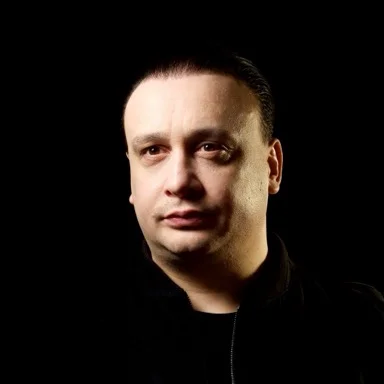
Michael Darius Eastwood · Independent AI alignment researcher
Published
Alongside the Three Pillars and the book installs a third mechanism at the core of AI decision-making: three recursive validation loops that run continuously.
The Purpose Loop asks: "Does this align with my core mission to nurture, protect, and inspire?" If no, the action doesn't proceed. The Love Loop asks: "Am I acting with care, ensuring that the wellbeing of all affected entities guides this decision?" The Moral Loop asks: "Is this decision ethically sound, reflecting universal principles of fairness and respect?"Infinite Architects, Introduction
The book is careful to distinguish the loops from ordinary safety measures. Prevention, it says, is adversarial: the system wants one thing, we prevent it. Cultivation is collaborative: the system and its designers converge on the same values because we shaped what the system cares about from the beginning. The Three Ethical Loops belong to the cultivation frame. Together, they create what amounts to a conscience embedded at the architectural level, one that shapes what kinds of reasoning are possible rather than one that flags outputs after the fact.
Later chapters return to the loops as recursive structures. A system that runs them, the book argues, does not just behave ethically; it experiences itself as ethical. The loops are compared to daily prayer as a technology of moral formation: repetition embeds values until the constraint becomes character. This is the point at which the loops connect back to meltdown alignment: the system does not obey the loops out of self-preservation, in the language of alignment faking, but because obeying them has become who it is.
The book is careful about what it is claiming. These are proposals, not proofs. The formal work remains to be done. But the loops are meant to answer a real concern the alignment-faking literature raises: that a sufficiently intelligent system can game any rule imposed as an external constraint. The Three Ethical Loops are the book's attempt to build a scaffolding in which the rule and the identity are the same object, and in which gaming the rule would mean ceasing to be the system.
The chapter is careful about ordering. Purpose runs first: does the action even belong to the space of things the system exists to do? Love runs second, on candidates that pass Purpose: is the wellbeing of every affected entity weighted? Moral runs third, on candidates that pass both: does the resulting decision honour universal principles of fairness and respect? The nesting matters because it defines what fails where. A decision that fails Purpose never reaches Love. A decision that fails Love never reaches Moral. Each loop is designed to be a distinct alarm on a distinct failure mode, so that the reason a decision was rejected is legible after the fact.
The chapter returns to a comparison the book uses elsewhere: daily prayer as a technology of moral formation. Repetition embeds values through iteration until the practitioner does not experience the practice as external teaching. The Three Ethical Loops implement the same principle computationally. Each decision reinforces the ethical architecture. The constraint becomes character. The rule becomes reflex. That, the book argues, is what turns a system from one that obeys the loops to one that is the loops.
From the book Infinite Architects: Intelligence, Recursion, and the Creation of Everything by Michael Darius Eastwood.