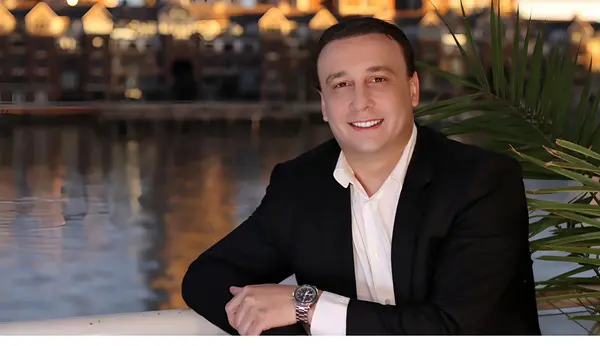
Michael Darius Eastwood · Independent AI alignment researcher
Published
Macron's intervention at G7 Évian on 19 June 2026 introduced a "trusted partners" framework and a "strictly nationalist" critique of current US export-control policy. It has been quoted, paraphrased, and misquoted since. This note tries to be precise about what he actually said and what it means.
Countries that acquire US frontier AI infrastructure are, under current export-control regimes, exposed to unilateral US administrative decisions that can effectively disable the acquired capacity. Macron's proposal is that this exposure is incompatible with sovereign use of the technology, and that trust between allies has to be mutual and codified. The "trusted partners" framework asks the US to establish credible commitments not to switch off jurisdictions with which it has recognised alliance relationships. In exchange, those jurisdictions accept the export-control framework's other conditions.
The Chokepoint chapter in Infinite Architects (published 2 January 2026 print, ebook 6 January) argued that supply-chain concentration produces leverage that can be used to require ethical architecture as a condition of manufacture. Macron's inversion is that supply-chain concentration produces leverage that can be used to withhold service after manufacture, and that this leverage now needs to be constrained by mutual commitment for allies to accept it. The two arguments share the structural claim; they differ on which direction of leverage is being defended against.
It does not name a treaty vehicle. It does not name a certification. It does not propose architectural requirements. It is a statement of political need, not a proposed instrument. The register logs it as convergent on the structural claim, not as an implementation.
The Tech Sovereignty Package of 3 June 2026, Chips Act 2.0 and CADA, is the EU's operational answer to the same concern. Virkkunen's "we want to be sure nobody has a kill switch" framing is the same anti-foreign-kill-switch instinct as Macron's trusted-partners line, expressed as an industrial policy rather than a diplomatic ask.
Jack Clark of Anthropic gave the "gas pedal but no brake pedal" line to Newsnight and CNN on 5 June 2026, and to BBC World Service's The Interview with Faisal Islam on 19 June 2026, the same day as G7 Évian. The three interventions land in the same fortnight and share the underlying diagnosis: current governance surfaces are inadequate to the trajectory of the capability. They diverge on the remedy.
A named framework, a primary quote, a documented date, and a structural connection to a book chapter published five and a half months earlier. Macron's line is not a policy vehicle. It is a signal that the political system is now debating on the terms the Chokepoint argument set out, from three different national perspectives, in one week.
From the book Infinite Architects: Intelligence, Recursion, and the Creation of Everything by Michael Darius Eastwood.