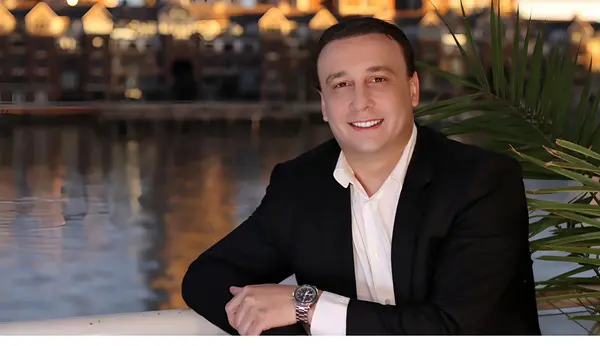
Michael Darius Eastwood · Independent AI alignment researcher
Published
A common demand from readers who have just seen the timeline is a number. Nineteen structural matches across two years: what are the odds by chance? The instinct is fair. The programme's refusal to supply that figure is not evasion; it is the same discipline that keeps the register at nineteen rather than thirty-one. Fabricated probabilities are the specific failure mode we watch hardest for.
Because the honest reference distribution does not exist. To turn nineteen convergences into a probability, one would need a well-defined universe of events that could have been claimed as convergences and were not, an independent judgement of which of those a competing observer would have counted, and a model of the arrival rate of unrelated developments in AI safety, hardware, geopolitics and theology. None of these are constructible without smuggling the answer into the assumptions. So we do not construct them. There is no probability number in this programme's public materials for a reason, and the truth gate treats any manufactured one as a violation.
Each row is a checkable event with a primary source, a class, a gap measured from a named artefact, and an argument for why the match is structural rather than superficial. The reader is invited to work through the rows in the order that suits their scepticism, starting with the ones they find least convincing. If they find several that fail, the pattern weakens for them. If they find several that survive, the pattern strengthens. What they are not asked to accept is a headline probability that would summarise their own eventual verdict without the work.
Anthropic's alignment-faking mechanism at 78 per cent in the RL-training condition against a 12 per cent baseline is not "AI safety in the news". Willow's below-threshold quantum error correction one day after the 8 December manuscript is not "Google announced something". Odeh's sub-5 microsecond runtime ethics gate is not "hardware is a topic". Pope Leo XIV's Babel-versus-Jerusalem framing is not "religion talks about technology". Each match is at the level of mechanism or structure, and the programme states the specificity in the row so the reader can decide whether coincidence would have to be doing a lot of work.
Some readers will judge the pattern coincidental. That is a legitimate stopping point. The programme does not claim otherwise, because it is not in the business of forcing conclusions past the reader's own assessment; it is in the business of making sure the assessment can be conducted at all. What the record refuses to do is inflate the story with an invented statistic that would turn a probabilistic instinct into a manufactured certainty. The gap between "this looks structural to me" and "the odds against are p equals ten to the minus something" is exactly the gap this programme keeps clear.
From the book Infinite Architects: Intelligence, Recursion, and the Creation of Everything by Michael Darius Eastwood.