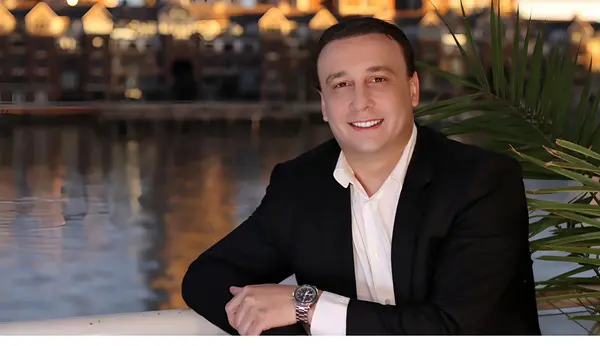
Michael Darius Eastwood · Independent AI alignment researcher
Published
An impatient reader arrives at the parts of this programme's material that mention neurodivergence and hears the alarm of a special-pleading move: the author has ADHD and ASD; therefore claims are exempt from ordinary scrutiny. If that were the argument the programme was making, the objection would be correct. It is not the argument. The argument is a specific technical position drawn from the peer-reviewed literature, and stating it precisely is the honest way to close this line of attack.
Hernandez-Espinosa, Abrahao, Witkowski and Zenil, working out of Oxford, KCL, the Turing Institute and Tokyo, publish in PNAS Nexus (5(4) pgag076, DOI 10.1093/pnasnexus/pgag076, additional preprint arXiv:2505.02581) an argument that alignment sits under Godel-Turing undecidability constraints and that cognitive diversity in overseeing populations is a contingent protective factor against uniform-blindspot failure modes. The result is technical: uniform cognitive style produces correlated errors in the class of oversight decisions that alignment requires. Diversity in cognitive style breaks the correlation. This is not a claim about who is smarter; it is a claim about which failure modes a population can absorb.
That the paper's structural conclusion is convergent with a position the 8 December 2024 manuscript stated more informally: that governance of AI should include voices from outside a narrow professional stratum, including faith communities and cognitive styles other than the dominant one, because the failure modes any single population misses tend to be exactly the ones that population is unequipped to see. The convergence register lists this as CONVERGENT. It does not list it as PREDICTION because the manuscript did not derive the Godel-Turing form of the argument, and it does not claim priority on the specific PNAS Nexus theorem. The credit for the technical result sits with the Oxford et al. authors, in the row.
That neurodivergent people are epistemically superior. That ADHD and ASD confer an insight into AI safety that neurotypical researchers lack. That the author's personal cognitive style vindicates the manuscript. None of these positions appear in the record; none are entailed by the PNAS Nexus argument; and the truth gate is watching for exactly the drift that would let one slip in. The claim is population-level and structural, not individual and heroic.
The PNAS Nexus paper is peer-reviewed, published in a venue with an established process, and its DOI resolves. That does not mean the claim is settled; the paper opens a research programme rather than closing one. Replications and stress-tests will settle it. What is worth noting is that this row is one of the few in the register whose external work is already peer-reviewed, which is exactly the level of institutional endorsement a hostile reader is entitled to demand. Available. Cited. Checkable. If special pleading is the objection, the answer is: the pleading is not doing the work; the paper is.
From the book Infinite Architects: Intelligence, Recursion, and the Creation of Everything by Michael Darius Eastwood.