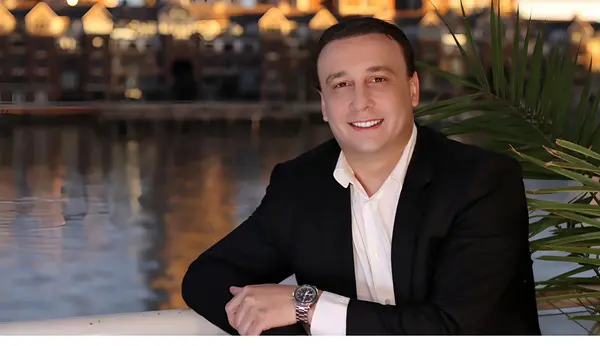
Michael Darius Eastwood · Independent AI alignment researcher
Published
Readers sometimes ask a fair question: is the author claiming to be some sort of prodigy? The honest answer is no. This note explains what is being claimed instead, and why the distinction matters enough to write down.
My mind runs a different attentional architecture, not a superior one. The pattern is a recursive iteration on the same problems, again and again, from slightly different angles, until the outcome-space is exhausted. Constant questioning: "and then what", "so what breaks", "but if the opposite is true", each answer feeding the next question. AI systems massively accelerate the answering step, which is what makes this cadence practical rather than a lifetime obsession. Run for years, that loop compounds into cross-domain expertise. The expertise is trained; it is not innate.
The genuinely interesting part is that the AI research literature has now shown this style of reasoning outperforms the alternative. Sharma and Chopra (arXiv:2511.02309, published 4 November 2025) reported that sequential, iterative, self-questioning reasoning outperformed parallel sampling in 95.6% of the configurations they tested. Their result is theirs and is properly credited to them. My own independent formalisation followed in Paper II in January 2026, approximately two and a half months after they published. The directional thesis, that iterative depth beats parallel breadth in intelligence architectures, appears in the 8 December 2024 manuscript (SHA-256 f0d1f38f), eleven months before Sharma and Chopra's publication. Priority on the quantified 95.6% finding is credited to them; the directional argument was on the record earlier.
Naming the sequence is not a priority claim over Sharma and Chopra. It is a description of why the personal narrative fits the picture: the reasoning architecture the AI-research literature just endorsed as the better one is close to what this neurodivergent mind runs by default. The mind is not superior; it is configured that way, and the field has since demonstrated the configuration works.
Claimed: a polymathic method. Recursive iteration, constant self-questioning, AI-acceleration, cross-domain integration, years of consistent application. It has produced, on this record, twenty-two research papers, a published book, a live falsification dashboard, and one retraction against my own earlier numbers. These are trained-in outputs, not gifts.
Not claimed: superior intelligence, prophetic status, or the stature of the historical exemplars sometimes wheeled out for comparison. The polymathic method is a method; being one of history's polymaths is a different question and one this note explicitly disavows. The Polymathic Neurodivergent Profile working paper (Paper C v2.0, 2026) says this in three separate paragraphs; this article is a shorter version of the same disavowal for readers who arrived without having read the paper.
Because there is a real question underneath the sceptical one, and the record should answer it. If a researcher produces an unusually broad output at unusually high speed with no institutional backing, a reader is entitled to ask "what is going on here". The honest answer is not a boast. It is a mechanism, tied to a peer-reviewed protective-factor argument in the alignment literature (Hernandez-Espinosa et al., PNAS Nexus 5(4) pgag076, 2026) and to a peer-reviewed reasoning-architecture finding (Sharma and Chopra, above). Scepticism welcome; the answer is on the page.
From the book Infinite Architects: Intelligence, Recursion, and the Creation of Everything by Michael Darius Eastwood.