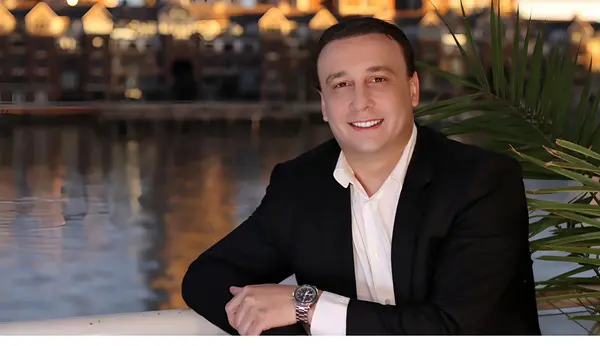
Michael Darius Eastwood · Independent AI alignment researcher
Published
The convergence register is the spine of this programme's public evidence, so its construction rules are published and mechanical. A row exists if and only if it satisfies four tests.
First, one external event per row. Thematic bundles are banned because they inflate counts: an early draft of the register counted a group of hardware patents, an ARM proposal and a Google architecture note as multiple entries and also as one, which is how a true count of nineteen was once misreported as thirty-one. Second, one primary source per row, meaning an identifier a stranger can resolve: arXiv number, DOI, patent number, or institutional URL. Press coverage may supplement but cannot substitute. Third, independence: no citation of this programme, no shared personnel, no plausible influence path. Events the author initiated, letters, deliveries, meetings, are listed separately as engagement and never counted. Fourth, a declared anchor: each gap is measured from a named, hash-timestamped artefact, so the direction and size of every gap is checkable.
Rows are graded PREDICTION only when the artefact states the specific result class in advance; CONVERGENT when independent work arrives at the same structure; CONCURRENT when the external work precedes the programme's own formalisation, in which case priority is credited to the external authors in the row text itself.
A monitor script re-resolves every source weekly; a dead link moves its row to quarantine until repaired. The register can therefore shrink, and has. A register that can only grow is a press release. This one is an instrument.
From the book Infinite Architects: Intelligence, Recursion, and the Creation of Everything by Michael Darius Eastwood.