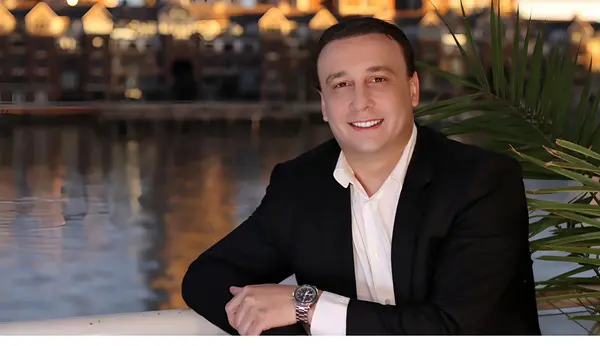
Michael Darius Eastwood · Independent AI alignment researcher
Published
Ternary Ethical Routing is the Eden Protocol's replacement for binary ethical decisions. Rather than force each ethical evaluation into an Affirm or Deny bucket, the system routes genuine uncertainty into an Investigate state. Investigate triggers additional loop evaluation, delegation to human oversight, or explicit refusal to answer. The design intent is to prevent the class of failure in which binary systems produce confident wrong answers under uncertainty.
The Eden Engineering paper's argument for ternary routing is that it participates in the recursion rather than sitting outside it. In a binary system the ethical check is a gate applied after the reasoning step. In the ternary architecture the evaluation is computed inside the reasoning step: the Investigate state feeds unresolved questions back into the next recursive cycle, so ethical evaluation benefits from the same compounding that drives capability. This is how the paper motivates the claim that ternary routing can allow the alignment-scaling exponent to track the capability-scaling exponent rather than fall behind it, and it is why the paper treats binary gating as structurally inadequate at high recursive depth.
Ternary Ethical Routing is specified in the Eden Engineering paper alongside the Three Ethical Loops. It is the Eden-native architecture for handling ethical uncertainty. The independent implementation pathway at higher funding tiers aims to produce an Eden-native training and inference stack that uses ternary routing throughout, rather than bolting it on to a binary-trained model.
Section 5 of the paper specifies the three states as Affirm, Deny and Investigate, with explicit safeguards against Investigate becoming a delay tactic: mandatory time bounds on investigation cycles, a precautionary default that fires if investigation does not resolve inside the bound, and internal simulated stakeholder models that reduce the need for external consultation on every uncertain case.
In February 2026 a product design engineer independently advised that ternary logic and non-MatMul architectures were the strategic path for efficient recursive inference. Five days later the NYU classical time crystal paper (Morrell, Elliott and Grier, Physical Review Letters 136 057201, 6 February 2026) demonstrated that nonreciprocal coupling, the same physical principle underlying ternary efficiency, enables sustained oscillation in classical systems (convergence 4 in the register). The engineer's intuition and the NYU result arrived independently at the same architectural principle.
Architectural specification. Ternary routing has not been implemented at frontier scale. The independent-implementation pathway is a funded workstream at higher grant tiers. Its empirical claim (that ternary routing improves alignment under uncertainty and reduces hallucination under load) awaits laboratory validation.
From the book Infinite Architects: Intelligence, Recursion, and the Creation of Everything by Michael Darius Eastwood.