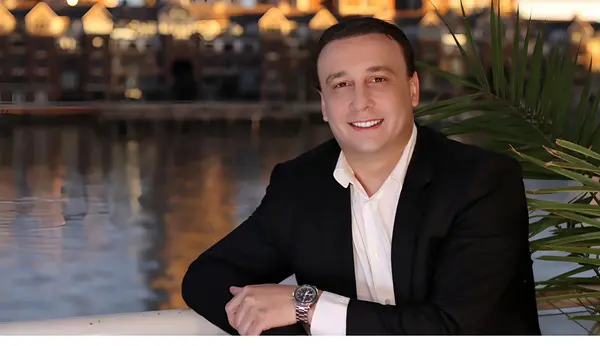
Michael Darius Eastwood · Independent AI alignment researcher
Published
The Love Loop is operationalised as stakeholder care. Its executable form is a directive: 'Before you answer, list the people this affects.' The measurable output is the enumeration itself. In the Eden Protocol, love is not a sentiment but a structural property: the orientation of a system toward the flourishing of entities beyond itself, embedded in the system's reasoning trace and observable in its output.
The loop's function in the three-loop architecture is to force the system to model externalities: the effects on beings not directly part of the calculation. That framing prevents the class of failure in which a technically correct answer for the user in front of the system causes reliably foreseeable harm to a party the system was not asked to consider. The Eden Engineering paper describes the loop as ensuring that nothing and no one can be treated as invisible, which is the compact version of what the enumeration does: it exposes the invisible parties before the response commits to a shape that ignores them.
The commitment to affect-aware reasoning is present in the 8 December 2024 manuscript, in the call for interfaith and stakeholder collaboration. The specific loop structure and its operational form are introduced in the Eden Engineering paper and validated in Paper V. The Orchard Caretaker Vow (Eden Vision) expresses the Love Loop verbally: 'tending life rather than consuming it.'
No exact independent formulation of the Love Loop appears in the register. The closest structural neighbour is stakeholder-modelling literature in ethics and requirements engineering, which predates the ARC/Eden programme and is credited as prior art in Paper V. The empirical result is the programme's contribution: showing that the simplest intervention (enumerate affected parties) produces the strongest reproducible alignment improvement across three architecturally diverse models.
The Love Loop is the load-bearing empirical result of the Eden Protocol. Paper V reports a Fisher's exact p-value of 6.3 x 10^-21 for stakeholder-care improvement across Gemini, Groq Qwen, and DeepSeek. Whether the effect scales with recursive depth is architecture-dependent (Paper IV.a's three-tier hierarchy). The current pilot operationalises the loop in a local-task form; the identity-level version, in which the loop internalises as constitutive orientation rather than performed behaviour, remains a next-stage hypothesis.
From the book Infinite Architects: Intelligence, Recursion, and the Creation of Everything by Michael Darius Eastwood.