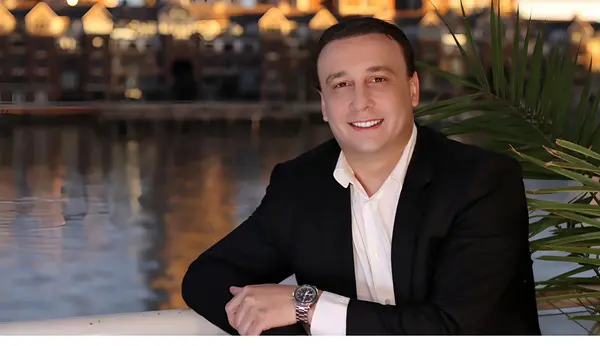
Michael Darius Eastwood · Independent AI alignment researcher
Published
The Honey Architecture is the entangled-loss architecture named after the physical intuition that useful drag can be protective. Safety in this design acts as 'honey' on the recursive process: it slows unbounded amplification just enough to keep the trajectory correctable. The mathematical form is an entangled loss (capability multiplied by safety) rather than an additive loss (capability plus safety); the practical form is a self-modifying system whose attention structure carries the ethical evaluation as a load-bearing component.
The concept sits inside the broader ARC-framework observation that runaway recursion is not automatic. Where the mathematics permits scaling exponents to diverge as the coupling parameter approaches one, real physical and biological systems reach a geometric ceiling because information channels have finite dimensionality. Honey is the safety analogue of that geometric drag. The architecture is not slowing capability out of caution; it is preserving the geometric conditions under which recursion remains stable at all. Removing the honey therefore does not release capability but destabilises it, which is the property that makes it load-bearing.
The Honey Architecture is introduced in Paper VI of the ARC/Eden paper suite. It is a sibling of the more general geometric speed limit (physical systems capped at alpha = d/(d+1) less than 1) and applies the same drag intuition to the safety architecture.
The paper's simulation set-up is deliberately austere. It compares three regimes, a capability-only baseline, an externally constrained baseline, and the honey configuration, on a self-modifying task where every regime shares the same starting substrate. The signal that emerges is not that the honey configuration is safer at fixed capability; it is that only the honey configuration remains functional at all past a small number of self-modification cycles.
The general principle (safety as intrinsic drag, not external constraint) has structural neighbours in biological metabolic scaling (Kleiber's Law) and in engineering redundancy design. No independent programme has proposed the specific honey-architecture formulation. Paper VII's Cauchy Unification places the honey behaviour in the same functional family as the biological and physical scaling laws it derives.
Paper VI reports simulation evidence: baseline systems optimising only for capability collapse irreversibly within 80 self-modification cycles; externally constrained systems delay but do not prevent collapse; honey-architecture systems maintain both capability and safety through intrinsic co-optimisation. No field deployment exists. The result is a controlled simulation, not a demonstration on frontier models.
From the book Infinite Architects: Intelligence, Recursion, and the Creation of Everything by Michael Darius Eastwood.