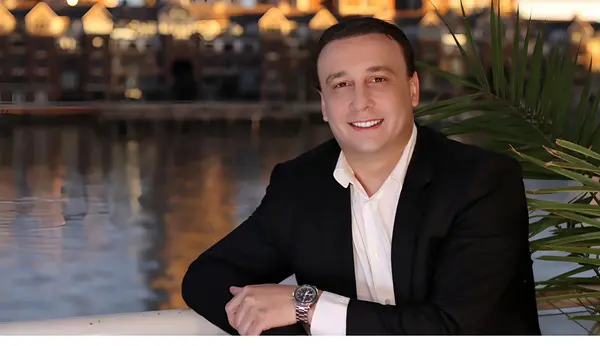
Michael Darius Eastwood · Independent AI alignment researcher
Published
Caretaker Doping proposes an alignment mechanism at the hardware level rather than at the model level. The idea is that a chip's root of trust could carry a signed, immutable "moral genome" token that gates the operations of the model running on the chip: certain inference paths would only execute if the token attests to a specific value configuration, and modifications to that configuration would be constrained by hardware rather than by policy. The construction is deliberately unbuilt at present, described in the book at technology readiness level 0 to 1. It is proposed as an engineering direction, not as an existing capability. Two other proposals in the same neighbourhood (Off-Switches and FlexHEG) have appeared in the academic literature since, without citing the manuscript, and the pattern of independent convergence is what raises the profile of the row.
The evidence for the claim is a paper trail rather than a bench-top demonstration. The Caretaker Doping proposal is written into the April 30 2025 self-emailed manuscript, whose Gmail Message-ID and SHA-256 hash sit on the evidence page. The book Infinite Architects, published 2 January 2026 in print and 6 January 2026 as an ebook, elaborates the mechanism and defines its terminology. Odeh's two patent applications (US 2026/0010411 and US 2026/0010780), filed July 2025 and published January 2026, describe a runtime ethics gate and sub-five-microsecond ethical filtering at the hardware level. Petrie's arXiv preprint 2509.07637 (September 2025) describes thousands of embedded off-switches per accelerator with less than one per cent die overhead. The FlexHEG proposal (Petrie, Aarne, Ammann, Dalrymple, arXiv:2506.15093, April 2025) describes ARIA-commissioned tamper-proof guarantee processors for AI chips. Precedence on the manuscript's articulation is fixed by the April 30 timestamp; FlexHEG is concurrent with it.
Nothing about Caretaker Doping has been built. The claim's status is Speculative in the honest sense: a proposed mechanism that lives entirely in the design documents. Any public asset that describes Caretaker Doping as existing technology violates the programme's promotion truth gate and is blocked from publication. What the convergence pattern shows is that other researchers, working independently and without citing the manuscript, are moving in a compatible direction on the hardware side. That is a supportive context, not a validation of the specific proposal. Hardware root-of-trust and trusted execution environments are established prior art; the specific alignment-token application is the new and unbuilt idea, and treating it as anything else would be dishonest.
The contract for Claim 18 at its present technology readiness level is a governance contract rather than an empirical one. Any public mention must state TRL 0 to 1 and note that no hardware implementation exists. Compliance is the null hypothesis; the truth gate blocks assets that violate the statement. If a hardware laboratory ever engages with the proposal seriously, the row graduates to an empirical contract whose testable prediction is that hardware-root-of-trust integration measurably constrains value drift under adversarial fine-tuning. Until a prototype is on a bench somewhere, the honest thing to say about Caretaker Doping is that it is an idea whose direction is now shared, and whose implementation is still ahead of us.
Related notes: April 2025: the manuscript that first named the Eden Protocol for the artefact this claim rests on; Claim 1 explained for the embedded-alignment thesis that Caretaker Doping is one instance of; the full arc for the position of the hardware convergence rows in the register. New readers: /start-here.html is a one-page orientation to Michael Darius Eastwood and the ARC/Eden programme, and separates speculative hardware framings like this one from the empirical strand.
From the book Infinite Architects: Intelligence, Recursion, and the Creation of Everything by Michael Darius Eastwood.