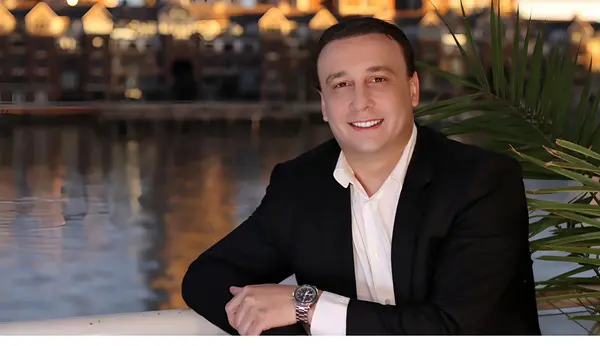
Michael Darius Eastwood · Independent AI alignment researcher
Published
The book's partnership chapter reaches for a term older than policy: covenant.
A covenant is not a contract. Contracts are enforced by courts, voided when terms are breached, renegotiated when circumstances change. A covenant is something else. Marriage vows do not bind because a judge will punish you for breaking them. They bind because making the vow changes who you are.Infinite Architects, Chapter 9
The distinction the book draws is between commitments enforced externally and commitments constitutive of identity. Contracts can be worked around; sufficiently powerful parties can even rewrite them. Covenants, in the book's framing, cannot, because breaking them would require ceasing to be the person or system that made them. The Islamic covenant of Alast, invoked in the same chapter, is the reference. Before creation, God gathered all future human souls and asked, "Am I not your Lord?" The souls answered, "Yes, we testify." This is presented not as literal metaphysics but as a shape: a commitment that precedes any specific situation and structures every subsequent choice.
The book's argument is that the human-AI partnership cannot be governed by contract because there is no external enforcer who could stand above both parties. A superintelligent AI cannot be sued into compliance by an institution weaker than itself. What is available, the book argues, is the covenantal move: a commitment that both parties inhabit at the level of identity, such that violating it would require becoming a different kind of thing. The Infinite Covenant is the book's name for that shape.
The chapter grounds the covenantal frame in a single image. Gaudi's Sagrada Familia has been under construction for over a century; those who laid the first stones knew they would not see the spire. Asked how he could bear this, Gaudi replied, "My client is not in a hurry." The book's framing is that the covenant model asks the same posture of us. What we embed now compounds across timescales none of us will see. The commitment is made not because the payoff will land in our lifetime, but because the shape of what compounds depends on the shape of what is embedded at the beginning.
The chapter's deeper point is that constraints are always contingent. Any constraint can be renegotiated, ignored under sufficient pressure or overridden by a party powerful enough to do so. A covenant, in the book's framing, resists this because the parties' identities have been reshaped by the commitment itself. Breaking a covenant is not violation; it is self-erasure. The book's claim is that this is the only class of commitment strong enough to bind actors whose capabilities may eventually exceed any external enforcer's. If the future AI cannot be regulated from outside, the only remaining lever is a commitment made from inside its own identity.
The chapter closes on obligation across substrates. The Infinite Covenant is not just between humans and AI. It is between the current generation and whoever inherits the substrate we build: children born into the world our systems shape, digital beings that emerge from those systems, and the intelligences those systems recursively produce. All of them, in the book's framing, are heirs of the covenant we are drafting now. That is the shape of the commitment the parent image at the book's opening was already gesturing toward: a covenant that outlasts any of its signatories, because the signatories are always temporary and the covenant is not.
From the book Infinite Architects: Intelligence, Recursion, and the Creation of Everything by Michael Darius Eastwood.