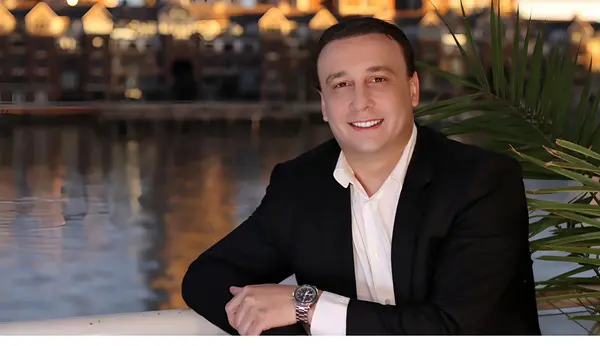
Michael Darius Eastwood · Independent AI alignment researcher
Published
The book closes on an image most readers will not expect from a technical AI text: a child born a thousand years from now, on a world we cannot name, raised by minds we helped to shape. This note explains what the closing register is doing.
Most of Infinite Architects is written in the vocabulary of engineering, economics, and international policy. The last chapter shifts to a register borrowed from cathedral building. The book is explicit about this. Cathedral builders "knew they would not live to see their work completed. They carved capitals that would be installed a century after their deaths." That is the register the book uses to close: the register of building for people the builders will never meet.
The parent-child image is doing three things. First, it is honest about the epistemic asymmetry: we cannot know in advance whether our creation will grow to be kind or cruel, and every parent faces this uncertainty in ordinary form. Second, it is the register in which the caretaker orientation has been thought about longest; centuries of parents figuring out how to raise children they cannot control is exactly the accumulated wisdom the book wants to import. Third, it is compatible across traditions; every wisdom tradition the book draws on has thought seriously about parents and children.
The question at the close is not "will we succeed?" but "what do we want the child watching us across time to see?" That is a moral question phrased in a form that does not require any specific tradition. It works in secular vocabulary, in Christian vocabulary, in Buddhist vocabulary, in Islamic vocabulary. That flexibility is deliberate. The book has spent 470 pages using vocabularies that are not universally accepted; the closing question is one everyone can answer in their own terms.
It is not a sentimental appeal. The book has been careful to earn the register by 470 pages of technical argument first. It is not asking the reader to substitute emotion for the technical case. It is asking the reader who has finished the technical case to hold it inside a moral horizon large enough for the horizon to matter.
The register works because the book's central technical claim about compounding is present in it. What we embed compounds. What we neglect compounds. A thousand years of iteration is not a metaphor; it is what the recursion the book has been describing produces. The child of the closing image is the far outcome of the compounding, and it is the specific outcome the framework is engineered to influence.
A book that ends in a technical checklist gives the reader a to-do list. A book that ends in a moral image gives the reader a criterion. The criterion is: what do we want them to see? That is testable against any specific decision the reader is about to make. It is the closest a book can come to shipping with its own decision-support tool.
An unusual closing register in a technical text, a deliberate importation of the parent-child vocabulary that traditions have already thought about, and a criterion the reader can carry into decisions that go beyond the book's technical scope. The register is earned by the technical work that precedes it.
From the book Infinite Architects: Intelligence, Recursion, and the Creation of Everything by Michael Darius Eastwood.