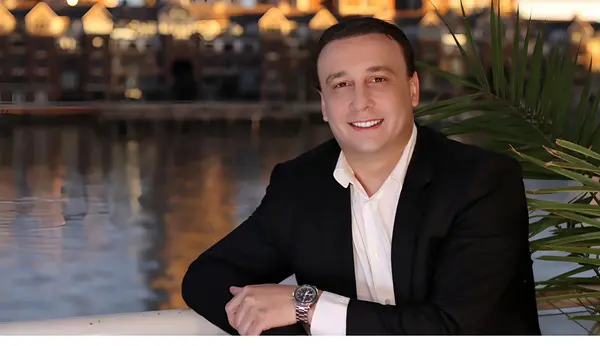
Michael Darius Eastwood · Independent AI alignment researcher
Published
The published ask is 624,000 pounds over 24 months. The figure is small on purpose. It buys one thing: the first empirical beta and k dataset for frontier models, produced under public preregistration and shipped with a one-command replication. It does not fund a laboratory, an institute, or a headcount that outlives the deliverable.
The largest line is time on frontier models. The design is six models across three correction architectures with powered trajectories on the order of ten thousand per model. That is a five-figure API bill on any single model and rises quickly across six. Because the harness runs multi-round trajectories with corrective structure that consumes tokens, the average per-run cost is higher than a typical benchmark. The budget assumes 2026 published rates with a contingency margin for rate changes.
One engineer for 24 months hardens the harness that already exists at v3, scales it to the six-by-three grid, validates the estimator on synthetic ground truth with bootstrapped confidence intervals, and ships the Docker replication package. The role is a full-time engineering commitment; the model of one engineer plus a principal keeps overhead low and coordination costs near zero.
Ten per cent funds the parts of the programme that make it credible to a hostile reader. Preregistration on OSF locks the analysis before data is collected. The open-data infrastructure hosts the raw trajectories at a scale that lets a third party rerun the estimator. Adversarial review bounties pay outside investigators to try to break the result, which is the cheapest available substitute for peer review under time pressure and materially harder to fake than a private prepublication read.
The budget does not fund a permanent lab, a policy team, a media programme, or a scale-up to more than six models. Those are separate asks with separate justifications. The programme's first job is to produce a real number and expose it to attack. If beta greater than k holds where systems are stable and fails where they drift, the instrument is proven and further work becomes tractable. If it does not, the framework as stated is wrong and the honest thing to do is publish the failure, not build institutions on top of an instrument that did not work.
Recursive Superintelligence raised 500 million US dollars in April 2026 against no published safety architecture. Six hundred and twenty-four thousand pounds is roughly a tenth of one per cent of that single round. The trade on offer is: for that fraction, the world learns whether such systems are inside or outside the stable envelope on a measured invariant that any regulator, funder, or board can request.
A tight budget, a single deliverable, and a published falsification path. Nothing about the shape of this ask requires the reader to believe in the result before it exists.
From the book Infinite Architects: Intelligence, Recursion, and the Creation of Everything by Michael Darius Eastwood.