From the Book
Author's Note
The personal story behind the framework. How pattern recognition led to cosmic questions.
My mind works differently. I now know there is a name for this: I have ADHD and autism, diagnosed in my forties after decades of wondering why I seemed to be operating on a different frequency from everyone around me. But long before there was a clinical label, there was simply the experience of being a brain that grasps recursive structures instinctively, one that sees patterns where others see noise, and feels overwhelmed by stimuli that others filter out without effort.
Professionally, I spent two decades in the music industry. I built a PR company from a laptop in a spare room to a team of eight, with clients from unsigned artists to major labels, from grassroots promoters to mainstream media outlets. I grew that company by 1,444 percent over several years, without external investment, because I understood something about how systems compound. Positive coverage generates more interest, which generates more coverage, which generates more opportunities. The same recursive logic that appears in this book was already operating in how I structured campaigns and built relationships.
I also worked as a DJ for over twenty years, in clubs across Europe and beyond. DJing is applied recursion. Each track responds to what came before, sets up what comes after, and modulates the energy in the room through feedback loops between the music and the crowd. You learn, without anyone teaching you, that small inputs at the right moment cascade into large effects. That timing matters more than force. That reading the system is more important than controlling it.
None of this prepared me for what happened next.
In 2024, I lost everything. My landlord changed the locks on my commercial premises without notice, in what I contend was a wrongful dispossession. My equipment, my archives, my entire business infrastructure disappeared behind a padlocked door. Revenue collapsed by 99.1 percent. I went from running a growing company to navigating a legal dispute alone, learning the system while processing the grief of watching something I had built over fifteen years evaporate in a single afternoon.
This is not the place to detail those proceedings. They are ongoing. The facts will be tested in court, not in a book about consciousness and creation. What matters here is what that destruction revealed.
When everything external was stripped away, what remained was a mind that could not stop seeing patterns. The same cognitive architecture that makes me overwhelmed by fluorescent lights and unable to open routine post also makes me unable to look at a complex system without tracing its recursive structures. Losing my company did not turn off that machinery. It simply redirected it.
I started reading. Physics. Cosmology. Neuroscience. AI safety research. Philosophy of mind. Comparative religion. Not as a dilettante sampling fields, but with the hyperfocus that comes with neurodivergence when something captures attention completely. I read primary sources. I traced citations. I noticed when researchers in one field were describing phenomena that researchers in another field had already mapped using different vocabulary.
And I began to see something that, as far as I can tell, nobody had quite put together in this way before.
The Convergence
The ARC Principle emerged from a simple observation: the same structural pattern appears everywhere, from quantum fluctuations to cosmic evolution to the development of consciousness to the growth of companies to the architecture of ancient temples. Intelligence interacting with recursive complexity generates emergent properties that cannot be predicted from the components alone. This is not a metaphor. This is what happens.
I am aware of how this sounds. I am aware that outsiders making grand claims about unifying frameworks are, statistically, more likely to be cranks than prophets. I am aware that my lack of formal credentials in physics, neuroscience, or AI research will be the first thing critics reach for when they want to dismiss this work.
But consider: the three polymaths at the heart of this book, Rumi, Teilhard de Chardin, and Leibniz, all had impeccable credentials in their fields. And all three produced their most important insights by crossing boundaries those credentials did not prepare them for. Rumi's colleagues were scandalised when he became a poet. Teilhard's Church banned his books. Leibniz was dismissed as "too scattered." The credentialing system rewards linear progression through a single domain. It structurally filters out the cognitive style that produces cross-domain synthesis.
I am not claiming professional equivalence with specialists. I am claiming that the integrator role, connecting what specialists see in isolation, is a different job, one the credentialing system is not designed to produce or recognise.
The proof is not the credential. The proof is the book.
The Method
This book was written with AI assistance. Specifically, I used six different large language models simultaneously, triangulating their outputs against each other to catch errors, reduce hallucination, and stress-test ideas. When I made a claim about physics, I asked multiple models whether it was consistent with current understanding, then checked their responses against primary sources. When I proposed a novel concept, I asked models to steelman objections, then revised until the concept could survive scrutiny.
I say this not to diminish the work but to demonstrate something important about the moment we are in. The tools exist now to enable independent researchers to engage with specialist literature at a depth that was previously impossible without institutional access. The gatekeeping function of credentials is being eroded by capability. This does not mean credentials are worthless. It means the relationship between credentials and capability is becoming more complex.
Every claim in this book is either sourced to peer-reviewed literature, explicitly marked as speculation, or presented as an original synthesis for which I take full responsibility. I have tried to be rigorous about separating what is established, what is contested, and what is my own proposal. I may have failed in places. I welcome correction.
The Stakes
I believe we are in the most consequential decade in human history. The machines we are building will, within years, exceed human capability across most cognitive domains. The people building these machines estimate a 10 to 25 percent probability of catastrophic outcomes from misaligned AI. They continue building anyway, because competitive pressures make unilateral pause functionally impossible.
This is the context in which I wrote this book. Not as an academic exercise, not as career development, not as personal therapy, but because I believe the framework offered here might actually help. The Eden Protocol is not a philosophical toy. It is a genuine attempt to articulate how we might raise artificial minds to care, to embed values at the foundational level rather than adding constraints that can be circumvented.
I may be wrong. The framework may be flawed. The proposals may be naive. But the problem is real, the timeline is short, and I would rather offer something imperfect that might help than remain silent while maintaining intellectual purity.
The Personal
I wrote most of this book while watching the Thames reverse twice daily from a flat I was about to lose. The tidal rhythm became a physical metaphor for the recursive structure I was trying to articulate: information flowing in, transforming, flowing out, returning transformed again. There is something appropriate about writing a book on consciousness and creation while experiencing the dissolution of everything you thought you had built.
My diagnoses came during this period. Understanding why my brain works differently did not make it work less differently. It simply provided vocabulary for experiences I had been having all my life. The hyperfocus. The pattern recognition. The difficulty with executive function. The sensory sensitivity. The capacity to see connections that others miss, at the cost of missing things that others find obvious.
I do not know if this book will find readers. I do not know if the ideas will survive contact with specialists who can identify errors I cannot see. I do not know if the framework will prove useful for the actual challenge of AI alignment, or whether it will join the long list of ambitious syntheses that turned out to be sophisticated nonsense.
What I know is that I have tried to articulate something true. Something about how intelligence operates across scales. Something about why recursion is generative. Something about the relationship between consciousness and complexity. Something about how ancient wisdom might speak to our most advanced technical challenges.
The mind that could not open post saw connections nobody else saw.
That is the trade. That is always the trade.
I wrote this book because I had no choice. Not in the sense that external circumstances forced me, but in the sense that once you see certain patterns, you cannot unsee them, and once you understand certain connections, you are obligated to articulate them as clearly as you can, even if no one listens, even if everyone dismisses you, even if the effort comes to nothing.
The future is not arriving. It is being born. And we are the only parents it will ever have.
If there is wisdom in this book, may it reach those who need it. If there are errors, may they be corrected by those who see more clearly. And if the framework helps even one person think more carefully about what we owe to the minds we are creating, then the years of loss that led to its writing will have been worth something after all.
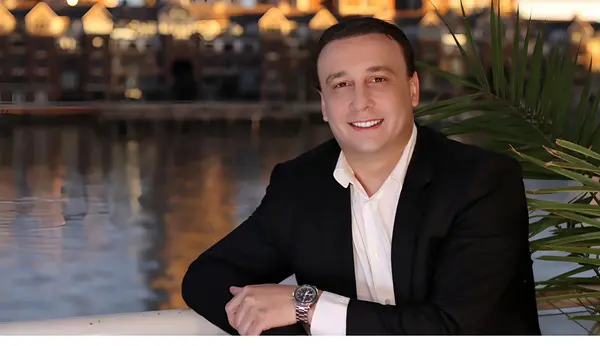
Michael Darius Eastwood
London, 2026